Category: Press

  • UNIPA leads the Italian activities of “Teachers 4.0 Digital Age”: the Third International Meeting held in Palermo

    UNIPA leads the Italian activities of “Teachers 4.0 Digital Age”: the Third International Meeting held in Palermo

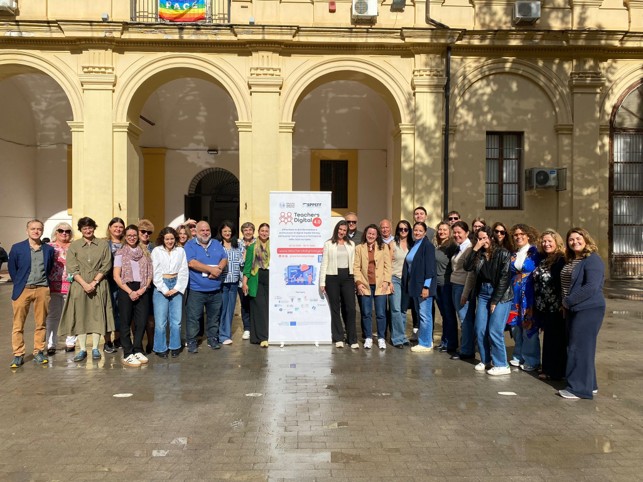
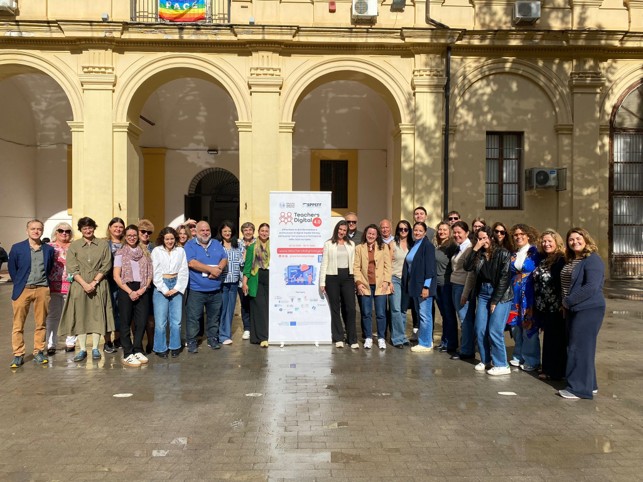
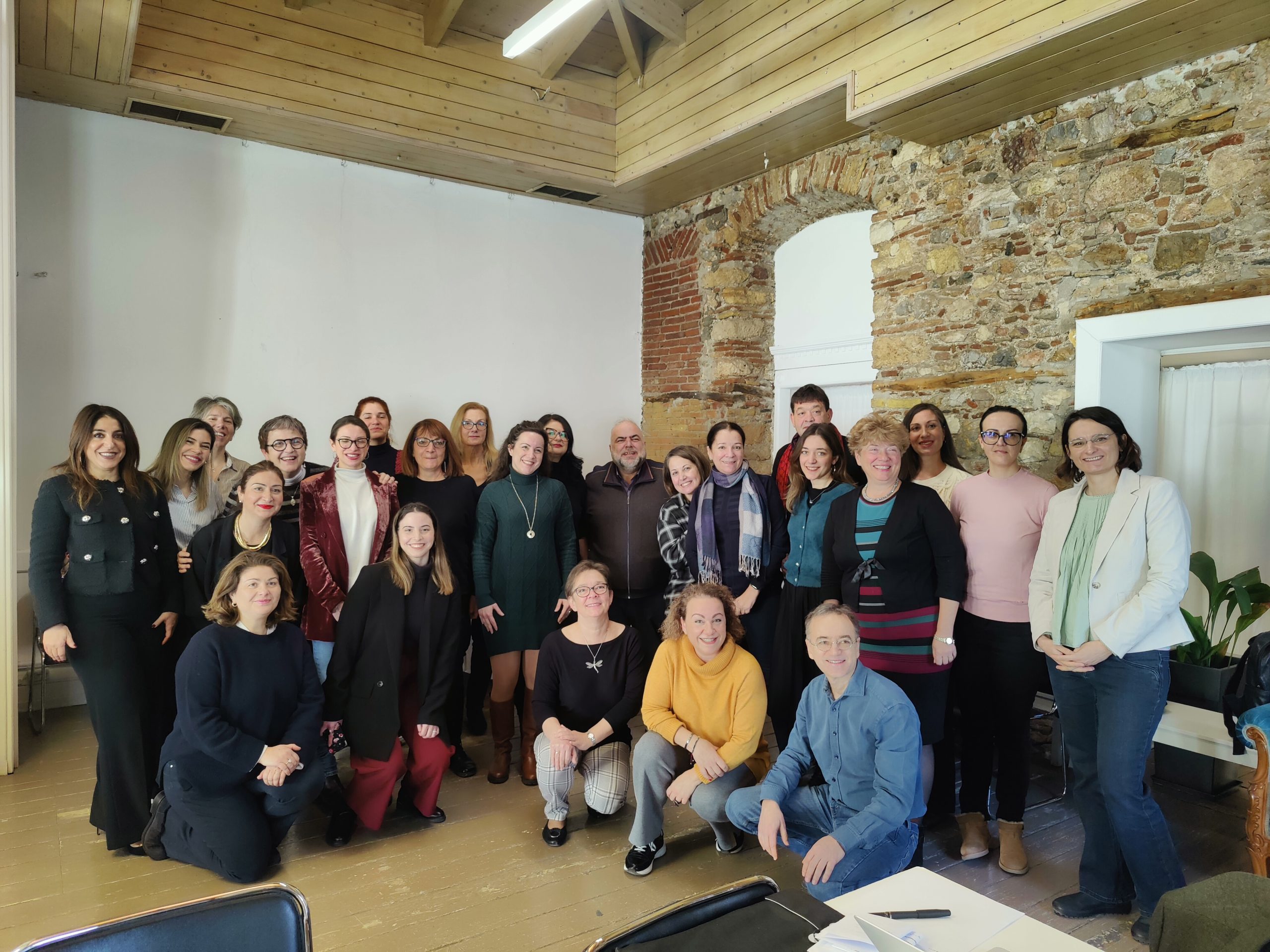
    On October 16–17, 2025, the third international meeting of the Erasmus+ project Teachers 4.0 Digital Age was held in Palermo. The event was organised by the University of Palermo under the coordination of Professor Gianna Cappello from the Department of Psychological, Educational and Human Movement Sciences (DSPPEFF), with the support of PhD candidates Paola Macaluso and Daniela Sortino. The initiative was carried out in collaboration with CESIE ETS and hosted by the Convitto Nazionale “G. Falcone” of Palermo, thanks to the kind availability of Prof. Concetta Giannino, Rector of the Convitto.

    The two-day event brought together 40 participants from partner universities and organisations from Cyprus, Greece, Bulgaria, Poland, Romania, Belgium, and Italy, who worked collaboratively on the development of the upcoming implementation steps as the project moves into its third year. The meeting also provided an important opportunity to highlight UNIPA’s contribution within the consortium. UNIPA led the production of the European University Curriculum for countering disinformation and promoting digital media literacy among pre-service and in-service teachers. Furthermore, last academic year, UNIPA already offered the curriculum as a course for university students enrolled in education programs. This year, the same course will again be provided to new students. UNIPA has also contributed to the development and validation of the project’s e-learning platform for in-service teachers.

    Paola Macaluso and Daniela Sortino (from the UNIPA team) have presented the project and its open-access materials to Italian teachers and educators during two editions of the  Media Education Summer School of MED (the Italian Association for Media Education), The Italian team is currently engaging 200 in-service teachers and educators in a dedicated training pathway that will further support the transfer of project outcomes into everyday educational practice.

    Open access resources and project materials are available at: https://teachers4-0.eu

  • Teachers 4.0 Digital Curriculum: Available now to empower teachers in digital media literacy

    Teachers 4.0 Digital Curriculum: Available now to empower teachers in digital media literacy

    Digital literacy and tackling disinformation are among the top three digital skills needed for the 21st century. Teachers need to be equipped with the necessary knowledge and skills to empower their students to think critically, make informed choices online and stay safe whilst continuously building their resilience in the digital world.

    Teachers 4.0 Digital offers a large-scale capacity-building activity for initial training and continuous professional development of teachers and educators across Europe with a focus on Bulgaria, Cyprus, Greece, Italy, Poland and Romania.

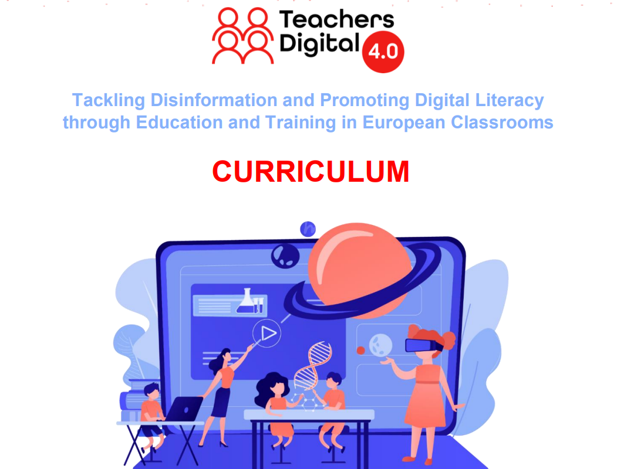
    For the past one year of our project, 34 established academics from 9 European universities and institutions have been developing an exclusive and thorough University Course entitled ‘Tackling Disinformation and Promoting Digital Media Literacy through Education and Training’.

    Our comprehensive program spans 60 hours of immersive learning, divided into two parts:
    30 hours of hands-on instruction and 30 hours of self-guided exploration, offering a blend of theory and practical application.

    Drawing inspiration from the latest educational frameworks and the digital needs of tomorrow, the curriculum is divided into 10 dynamic modules that will unlock new possibilities for teaching in the digital world.

    Module 1 – Introduction
    Gain an insightful overview of the course, its objectives, and the powerful methodologies behind it.

    Module 2 – Disinformation: What Are We Talking About?
    Learn to distinguish disinformation, explore key concepts like participatory culture, echo chambers, and the filter bubble, and see how disinformation threatens democracy, democratic institutions, and equal digital participation.

    Module 3 – More Key Terms and Definitions
    Dive into essential digital media literacy terms like troll, phishing, cheapfake, deepfake, and verification. With an interactive glossary and hands-on activities, learners will not only grasp these concepts but also develop the skills to spot and tackle misinformation in the digital world.

    Module 4 – Setting the Scene for Teaching and Learning in the Digital School Environment
    Learn how to create a safe space for discussing sensitive topics and understand your role in guiding these important conversations with your students.

    Module 5Assessing and Evaluating Digital Media Literacy in Schools
    Gain practical tools and strategies to evaluate and enhance your students’ digital skills.

    Module 6 – Explore the Key Media Practices of Children and Students
    Learn why connecting with your students’ digital lives matters, and how their online experiences shape their worldviews. Discover a framework for analysing their media habits and interactive activities to help them reflect on their own media behaviors in a fun way!

    Module 7 – Teaching Digital Media Literacy and Disinformation
    Equip Students with critical media skills!Find out how to help students understand media texts, spot bias, use fact-checking techniques, and create responsible media, empowering them to become digital citizens.

    Module 8 – Building Digital Media Literacy Competences in the Classroom: Becoming Digital Citizens
    Explore how to equip students with essential digital media literacy skills, focusing on responsible online behavior, critical thinking, and safe digital practices.

    Module 9 – Students in All Their Diversity
    Gain insights on how to address diversity in the classroom, understanding its importance and how misinformation impacts different social groups. Practical activities are included to help engage students and foster inclusive learning environments.

    Module 10 – Practical Examples of Lesson Plans
    Learn about an instructional model to help teachers create effective lesson plans and offers practical examples that can be used, adapted, or serve as inspiration to guide students toward becoming responsible digital citizens.

    All the modules are accompanied by suggested teaching methods and tools suitable for our target group and consistent with the course goals.

    Follow us on LinkedInFacebookInstagram!

  • Teachers 4.0 Digital Project Meeting in Sofia: Our Curriculum to Support Teachers in Digital Media Literacy is Coming Out Soon!

    Teachers 4.0 Digital Project Meeting in Sofia: Our Curriculum to Support Teachers in Digital Media Literacy is Coming Out Soon!

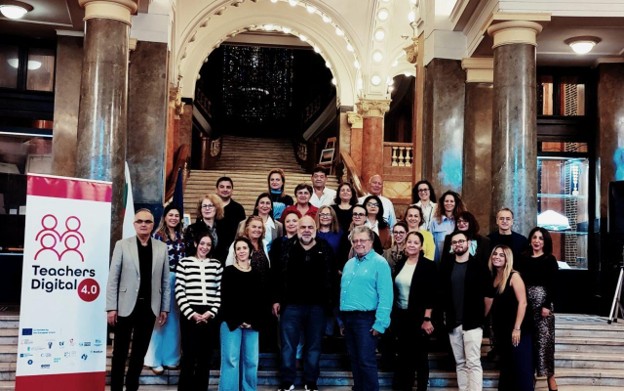
    The Teachers 4.0 Digital partners gathered in a two-day project meeting hosted by Sofia University St. Kliment Ohridski on 10-11for productive and inspiring exchanges to plan the next steps of our mission to empower teachers in digital media literacy.

    The main highlight of the meeting was the development of the Teachers 4.0 Digital curriculum that aims to guide teachers and educators in teaching digital media literacy to their students. The curriculum covers everything from understanding misinformation and cognitive biases to fostering digital citizenship and inclusivity in the classroom with real-world issues, practical tools, and adaptable lesson plans:

    • Introduction
    • Disinformation: What are we talking about?
    • More key terms and definitions
    • Setting the Scene: Teaching and learning in the digital school environment
    • Assessing and evaluating digital literacy in schools
    • Explore the key media practices of children and students
    • Teaching digital media literacy and disinformation
    • Building digital media literacy competencies in the classroom and school: becoming digital citizens
    • Students in all their diversity
    • Practical examples of lesson plans

    It will be available in 6 languages by the beginning of 2025: Bulgarian, English, Greek, Italian, Polish, and Romanian. The project meeting was an opportunity to align the efforts of the partners for translating and formatting the curriculum in an engaging way and getting ready to disseminate it widely.

    In the meantime, the development of our e-learning platform is going at full speed: The partners brainstormed during the meeting on how to offer the most accessible and user-friendly capacity-building experience through this platform. The platform will be launched in 2025 to upskill the primary and secondary school education teachers and educators in the project languages.

    Thanks to Sofia University St. Kliment Ohridski for their great hospitality and to all partners who joined us in Sofia.

  • Teachers 4.0 Digital Kick-off Meeting in Athens: Empowering Teachers and Educators for Promoting Digital Literacy in European Classrooms

    Teachers 4.0 Digital Kick-off Meeting in Athens: Empowering Teachers and Educators for Promoting Digital Literacy in European Classrooms

    The Teachers 4.0 Digital, a flagship project aimed at tackling disinformation and promoting digital literacy through education and training in European classrooms, launched its activities at the kick-off meeting in Athens, Greece on 1-2 February 2024.

    This dynamic project consortium consists of 17 organisations from 7 countries, including renowned universities and faculties of pedagogy, public authorities in the field of education, adult education providers with extensive experience in the field of teacher training and European networks on media literacy and digital skills.

    Digital literacy and tackling disinformation are among the top three digital skills needed for the 21st century. Teachers need to be equipped with necessary knowledge and skills to empower their students to think critically, make informed choices online and stay safe whilst continuously building their resilience in the digital world.

    Teachers 4.0 Digital offers a large-scale capacity building implementation for initial training and continuous professional development of teachers and educators across Europe with focus on Bulgaria, Cyprus, Greece, Italy, Poland and Romania.

    The kick-off meeting was an opportunity for the partners to get to know each other, exchange experiences and plan the first steps towards project’s intended outcomes:

    • Development of a comprehensive curriculum that will guide teachers and educators in the ways they may cultivate to their students the necessary skills to thrive in the digital age.
    • Design of a University course on the topic of combating disinformation and digital literacy
    • Development of an e-Learning platform for the upskilling of thousands of primary and secondary school education teachers and educators that will offer the Teachers 4.0 Digital course in a blended learning format.

    The ultimate aim of the project is the delivery of a large-scale upskilling activity involving over 2.000 in-service teachers/educators and teachers-to-be in the countries involved.

    The project aims to create a wider impact by initiating a public debate with the involvement of all relevant stakeholders, contributing to a policy reform on digital literacy education at national and European levels, and to provide a long-term comprehensive guidance on issues relating to tackling disinformation and promoting digital literacy.