
Teaching in today’s classrooms requires educators to do much more than deliver subject knowledge. They are increasingly expected to help students think critically, evaluate online information, recognise misinformation, and use digital technologies responsibly. To support teachers in addressing these challenges, the Teachers 4.0 Digital Age project developed an innovative European professional development programme that combined practical training, digital learning resources, and collaborative learning opportunities to strengthen digital and media literacy in school education.
One of the project’s main achievements was the successful implementation of an international training programme involving more than 1,500 teachers from Greece, Bulgaria, Cyprus, Italy, Poland, and Romania. Through a blended learning approach that combined self-paced online learning with live online seminars, collaborative discussions, and practical classroom activities, participants developed new competences while exchanging experiences with colleagues from across Europe.
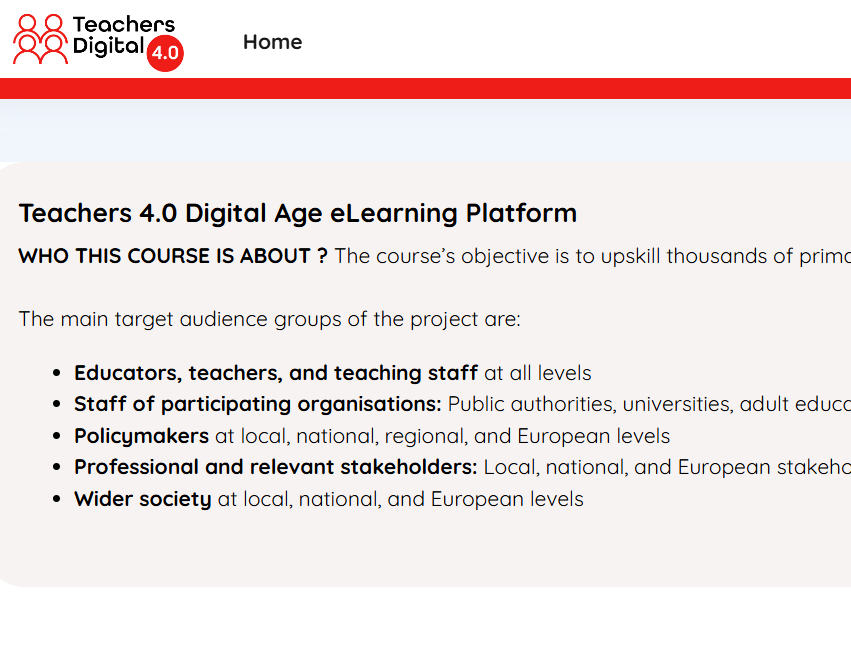
At the heart of the programme was the Teachers 4.0 Digital Age eLearning Platform, a multilingual learning environment designed to support teachers before, during, and after the training. More than a repository of educational materials, the platform offers a complete learning experience where participants can follow the course at their own pace, watch introductory videos, complete interactive learning activities, assess their understanding through quizzes, and revisit the content whenever needed. It also encourages collaboration among participants, creating a European community of educators who can exchange ideas and good practices beyond the live seminars.
The platform hosts a 60-hour online course, available in six languages, and organised into ten thematic modules that guide teachers from understanding the digital information landscape to applying practical classroom methodologies. The curriculum covers the concepts of misinformation and disinformation, teaching and learning in digital school environments, assessing digital literacy, children’s media practices, media literacy education, digital citizenship, inclusive education, and practical lesson plans ready to be implemented in the classroom. Each module is supported by introductory videos, multimedia resources, interactive activities, and self-assessment exercises that promote active engagement and reflection throughout the learning process.
A distinctive feature of the programme was its strong pedagogical focus. Rather than concentrating exclusively on digital tools, the training explored how digital and media literacy can be integrated into everyday teaching across different subjects and educational levels. Participants analysed authentic examples of online content, discussed the educational implications of Artificial Intelligence, examined how misinformation spreads, and explored practical strategies for helping students evaluate information, verify sources, recognise manipulation techniques, and develop critical thinking skills.
The live online seminars complemented the online course by creating opportunities for discussion, peer learning, and professional exchange. Teachers reflected on common classroom challenges, shared successful teaching practices, and explored ways of adapting the learning materials to different educational contexts. This collaborative approach strengthened professional learning communities across the participating countries and encouraged the exchange of innovative educational practices.
Participant feedback demonstrated the educational value of the programme. Teachers particularly appreciated the practical orientation of the training, the quality of the educational resources, the flexibility of the eLearning platform, and the direct applicability of the lesson plans and classroom activities. Many participants reported feeling more confident in teaching digital and media literacy, addressing misinformation in the classroom, and discussing emerging topics such as Artificial Intelligence with their students.
Beyond the implementation of the training programme, Teachers 4.0 Digital Age has created a sustainable educational legacy. The eLearning platform, together with its videos, learning materials, classroom activities, and lesson plans, will remain freely available, enabling teachers to continue their professional development and allowing new educators to benefit from the project’s results. By offering open educational resources and fostering collaboration among teachers across Europe, the project supports the long-term integration of digital and media literacy into school education. Ultimately, the success of Teachers 4.0 Digital Age is reflected not only in the number of teachers who participated but also in its lasting impact on teaching and learning. By equipping educators with practical methodologies, innovative educational resources, and greater confidence to address digital challenges in the classroom, the project contributes to creating learning environments where students become critical thinkers, responsible digital citizens, and active participants in an increasingly digital society.