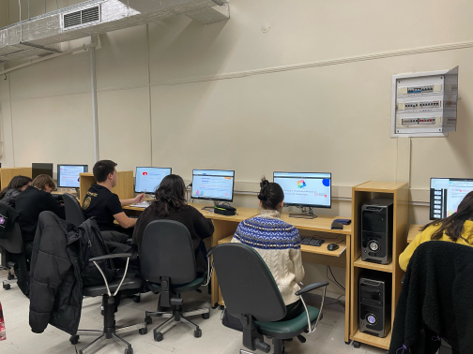
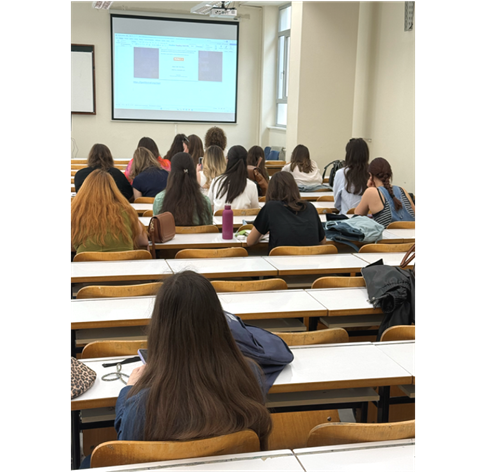
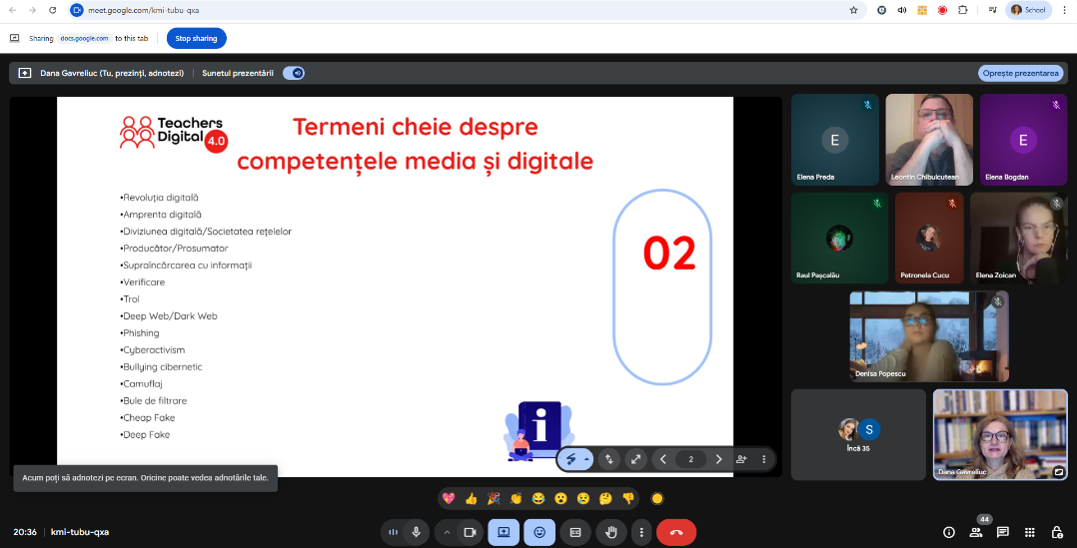
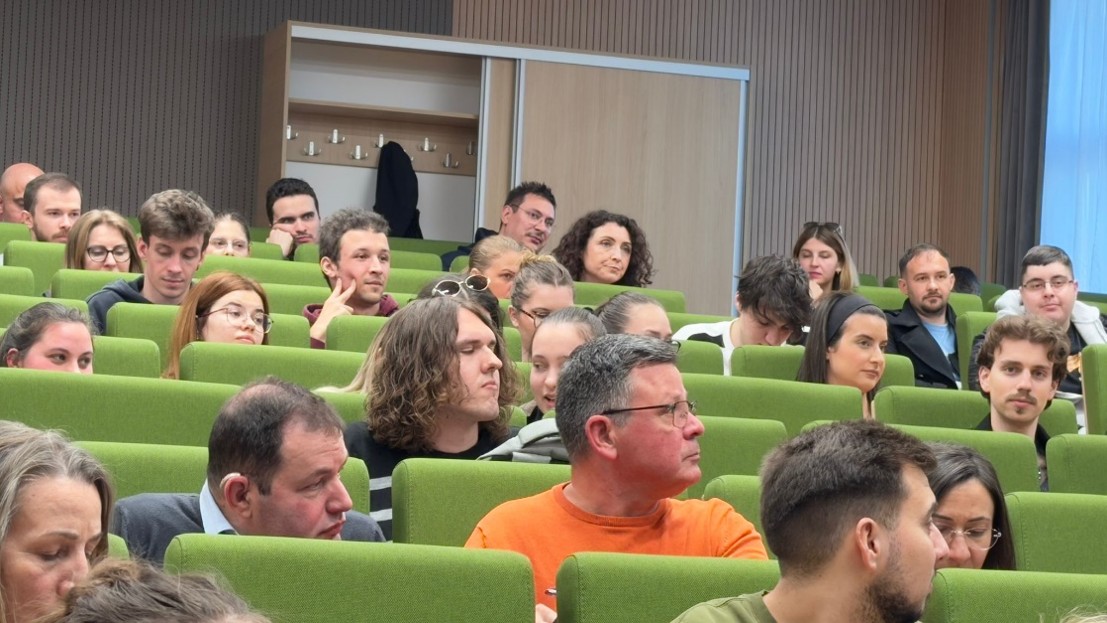
As part of the European project Teachers 4.0 Digital Age, the Greek national teacher training program was implemented with the aim of strengthening educators’ knowledge and competencies in digital literacy, critical evaluation of online information, and the identification and management of misinformation. The program was jointly implemented by the Institute of Educational Policy (IEP) and the Athens Lifelong Learning Institute (ALLI) as part of their collaboration in the implementation of Work Package 5, representing one of the project’s core capacity-building activities.
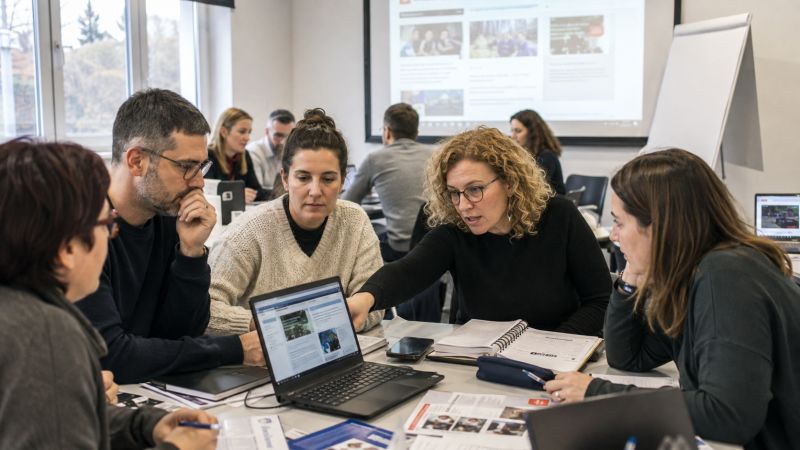
The program adopted a blended learning approach, combining 30 synchronous online training sessions with 60 hours of self-paced asynchronous learning delivered through the project’s e-learning platform. A total of 400 teachers registered, while 290 successfully completed the program. Participants included primary and secondary school teachers, school leaders, education executives, and other education professionals from a wide range of disciplinary backgrounds and geographical regions across Greece.
The training curriculum focused on developing digital and media literacy competencies, strengthening participants’ ability to recognize and critically evaluate online misinformation, use fact-checking tools, and integrate innovative digital applications and Artificial Intelligence technologies into their teaching practice. The learning process was supported through collaborative activities, authentic case studies drawn from the digital environment, and interactive educational tools, fostering the connection between theoretical knowledge and everyday classroom practice.
The program evaluation demonstrated highly positive results regarding both the quality of the training process and the achievement of its intended learning outcomes. Participants particularly appreciated the practical orientation of the training, the quality of the educational resources, and the immediate applicability of the proposed pedagogical approaches in classroom settings. Furthermore, the comparison of the pre- and post-training questionnaires revealed a substantial increase in teachers’ confidence in identifying misinformation, using fact-checking tools, applying digital technologies, and integrating digital literacy activities into their teaching.
An equally important finding was participants’ strong intention to transfer the knowledge and skills acquired through the program into their own educational contexts by designing lesson plans, implementing critical thinking activities, and promoting digital literacy initiatives within their schools. At the same time, participants highlighted the need for further professional development opportunities, particularlyin relation to Artificial Intelligence, digital citizenship, and emerging forms of online misinformation.
The outcomes of the Greek implementation confirm the contribution of the Teachers 4.0 Digital Age project to strengthening teachers’ professional competencies and promoting innovative pedagogical approaches that respond to the demands of the digital era. Through the development of practical tools, innovative methodologies, and educational resources, the project contributes to building an educational community capable of fostering digital literacy, critical thinking, and the responsible participation of students in today’s digital ecosystem.
Category: News
-

Strengthening Digital Literacy and Tackling Misinformation through Teacher Professional Development: Outcomes of the Teachers 4.0 Digital Age Training Program in Greece
-

Digital Literacies: Course “Encouraging Critical Thinking in the Classroom” and Cyprus’ National Policy Roundtable
As digital technologies continue to shape how children and young people learn, communicate, and access information, the development of digital literacy has become an increasingly important educational priority. Within this context, the Erasmus+ co-funded project Teachers 4.0 Digital Age: Tackling Disinformation and Promoting Digital Literacy through Education and Training in European Classrooms seeks to support educators, policymakers, and other stakeholders in addressing the challenges and opportunities of the digital age. In Cyprus, two important project activities were recently completed: a specialised online course for educators and a national policy roundtable on digital and media literacy.
Digital Literacies: Course “Encouraging Critical Thinking in the Classroom”
As part of the project, the Cyprus Pedagogical Institute offered the Specialised Online Course Digital Literacies: Encouraging Critical Thinking in the Classroom on two occasions. The first cycle was delivered between November 2025 and January 2026, while a second cycle was offered between May and June 2026, attracting educators from primary, special, secondary general, and technical and vocational education. The course aimed to strengthen teachers’ digital literacy competences and equip them with practical strategies to address misinformation, teach for critical thinking, and support students in navigating digital environments critically, responsibly and effectively.The course combined synchronous and asynchronous learning opportunities, enabling participants to engage with both the theoretical and practical dimensions of digital literacy education. Through interactive online sessions and self-paced learning modules hosted on the Project’s Learning Platform, participants explored topics such as digital challenges and critical thinking, the evaluation of the trustworthiness and validity of online information sources, and the design of classroom activities that foster digital literacy skills, including critical thinking, information evaluation, and responsible engagement in digital environments.
The course also examined children’s digital habits and everyday online practices, encouraging educators to build on students’ existing knowledge, experiences, and competencies in digital environments. Emphasis was placed on developing teaching approaches and activities that leverage children’s digital skills and integrate meaningful digital literacy practices across different areas of the curriculum.
In addition, the course explored how emerging communication technologies, particularly social media, have transformed the landscape of communication compared to traditional channels. Participants reflected on both the opportunities and the challenges associated with these technologies, considering their potential to enhance communication, participation, and access to information, as well as the risks they pose in relation to misinformation, privacy, online safety, and digital wellbeing.
Cyprus’ National Policy Roundtable
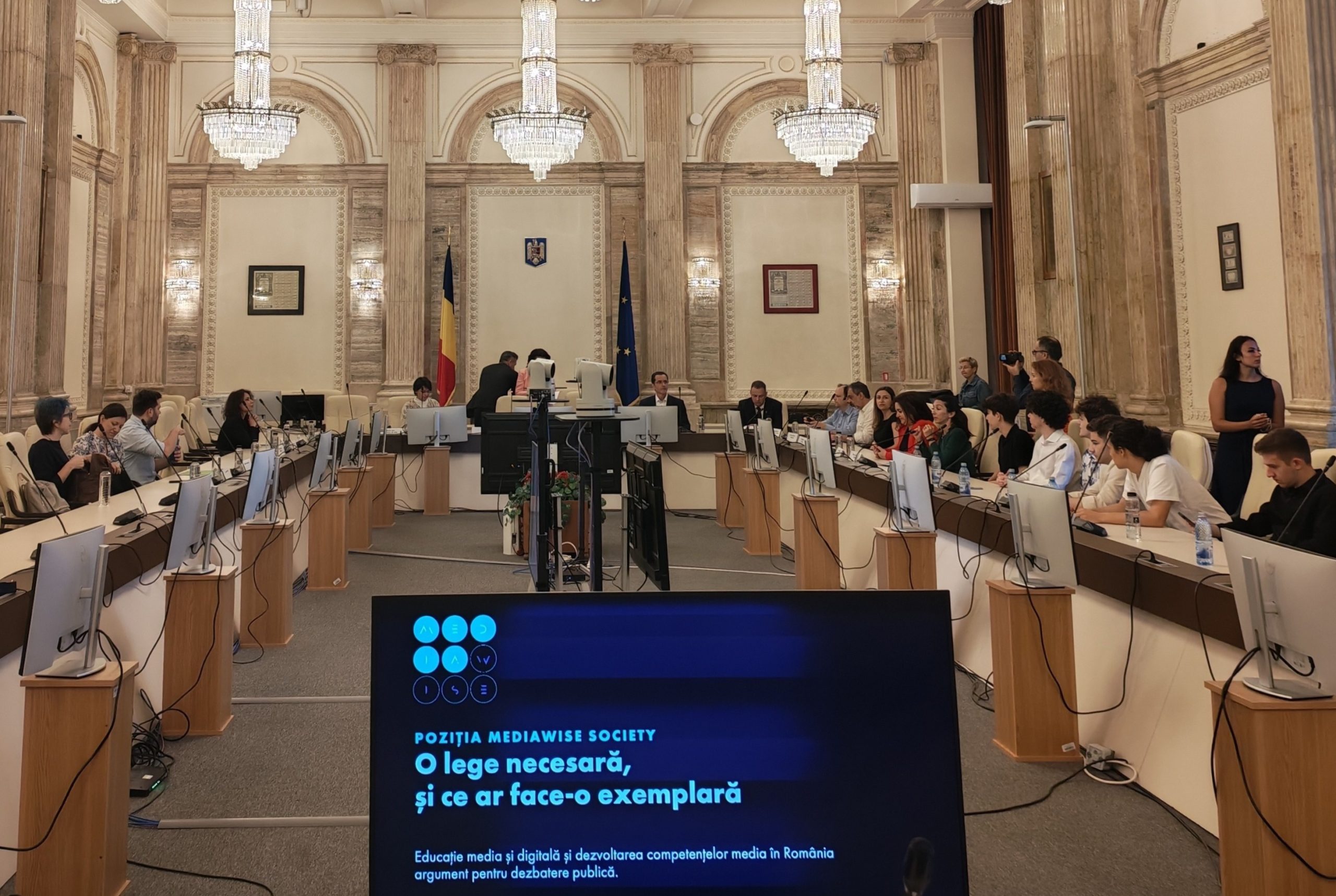
Complementing the professional learning activities offered to educators, the project also sought to strengthen dialogue among key stakeholders involved in digital literacy policy and practice. To this end, the Cyprus Pedagogical Institute and the European University of Cyprus co-organised a national policy roundtable, bringing together representatives from government, academia, civil society, the media sector, and teacher education.The discussion focused on the current state of digital and media literacy in Cyprus, key challenges related to misinformation, artificial intelligence, and online safety, as well as opportunities for strengthening digital literacy across education and society. Participants highlighted that existing initiatives remain fragmented and largely project-based and stressed the need for a coordinated national strategy that promotes collaboration, sustainability, and wider impact.Key recommendations included integrating digital literacy across school curricula, strengthening teacher education programmes, expanding training opportunities for parents, journalists, and the general public, and developing stronger policy frameworks at both national and European levels to address emerging digital challenges. The discussion concluded with a shared commitment to continue the dialogue and work towards the development of a comprehensive national strategy for digital-age literacies.
Looking Ahead
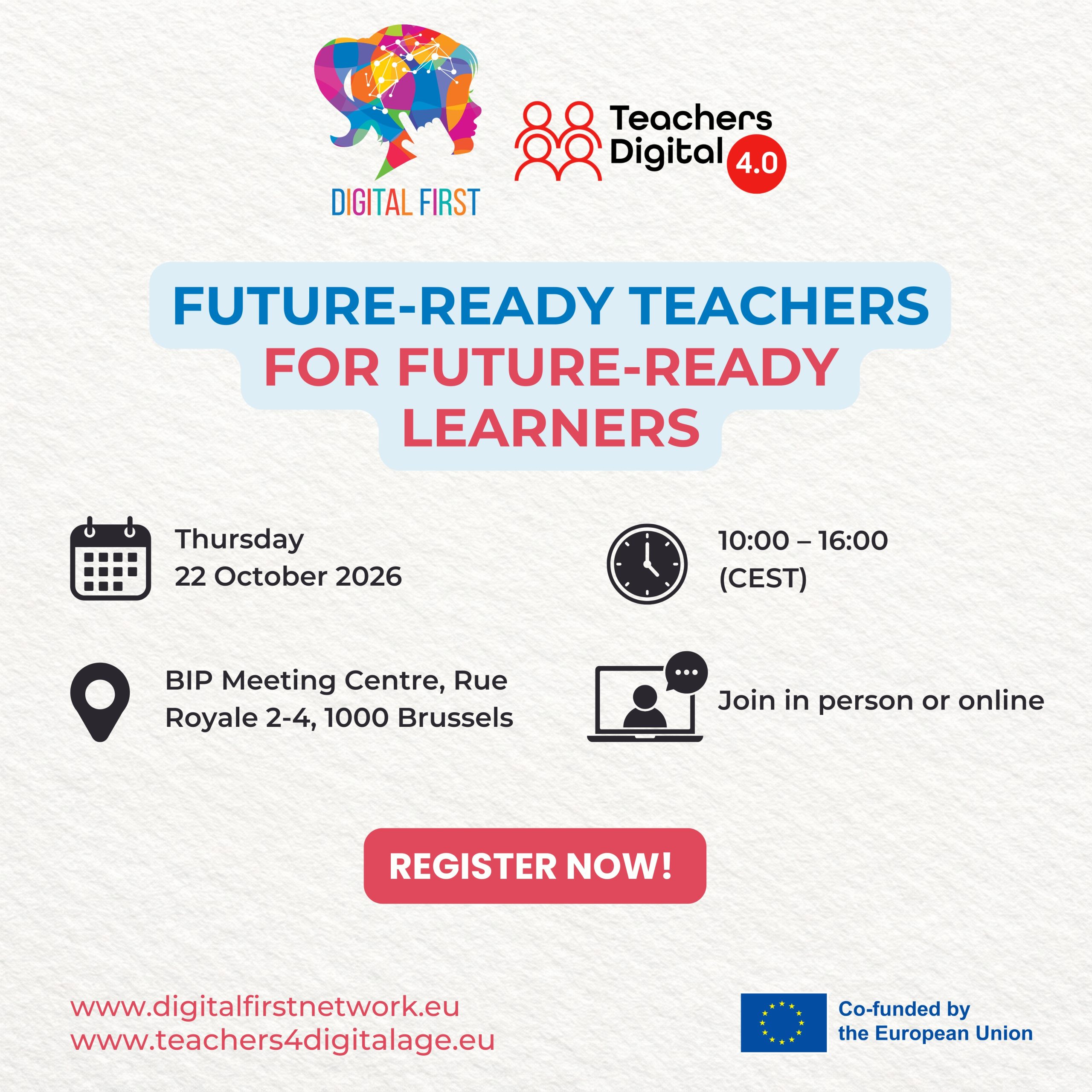
The project will continue to build on these outcomes through further dissemination, dialogue, and collaboration activities, particularly through the national workshops and conferences that will be organised in the participating countries. These events will provide opportunities to share project results, exchange good practices, and engage educators, researchers, policymakers, and other stakeholders in discussions on digital literacy and critical-thinking skills and dispositions.A major milestone will be the organisation of the project’s final international conference in Brussels in October 2026. The conference will bring together educators, researchers, policymakers, and project partners from across Europe to share project findings, showcase educational resources and innovative practices, discuss policy recommendations, and strengthen European cooperation in promoting digital literacy and resilience against misinformation, disinformation and malinformation.
-
Teachers 4.0 Digital Age: European Training Against Disinformation Draws to a Close
The training phase of the Erasmus+ European project Teachers 4.0 Digital Age, dedicated to digital media literacy and the fight against online disinformation, is nearing its conclusion. Six countries are involved — Bulgaria, Cyprus, Greece, Italy, Poland and Romania — and the results are significant: across Europe, thanks to the multilingual online course developed by the consortium, over 3,000 in-service teachers and educators have been trained to date.
For Italy, the project partner is the University of Palermo, Department of Psychological, Pedagogical, Exercise and Training Sciences (SPPEFF), under the coordination of Prof. Gianna Cappello and with the support of doctoral researchers Paola Macaluso and Angela Daniela Sortino. UniPa has been responsible for the training of future teachers and educators — those who will bring these competencies into the classrooms of tomorrow — reaching approximately 250 university students through a structured critical digital literacy programme.
In parallel, the training of in-service teachers, delivered in collaboration with the Regional School Office of Sicily (USR Sicilia) via an e-learning platform and interactive webinars, has already involved around 200 teachers and is still ongoing. A key supporting partner and stakeholder in the project is the Convitto Nazionale Giovanni Falcone in Palermo, which hosted the third transnational consortium meeting and engaged 65 teachers from all school sectors in the 60-hour online course “Education for Citizenship: Tackling Disinformation”.
The online course platform and the outcomes of the training for both future teachers and in-service teachers will be presented by Paola Macaluso and Angela Daniela Sortino on 14 July during a parallel session of the 35th MED Summer School on Media Education, aimed at teachers, educators and communication professionals, to be held in Ferrara from 14 to 16 July 2026. Discover the programme and join the MED Summer School! -
Promoting media literacy for students in educational sciences
Today’s students use social networks intensively and take advantage of the digital public sphere as a place for information, contestation, organization and debate, as well as a platform for political, social, educational and ethical struggles. They are also the most vulnerable target groups to misinformation and propaganda as they have not fully developed critical thinking skills and are prone to confusion and credulity (Wuyckens, Landry, Fastrez, 2022). Media literacy education equips them with critical skill sets that enable them to quickly identify fake news, misinformation and propaganda. Daily life unfolds in this space-time experience that constitutes continuous flows between physical and digitalized reality on the Internet. Hence, connectivity is a principle of life in society (Tropiano, Reis, 2024). In a turbulent information ecosystem and participatory media culture, news literacy becomes an essential competence (Cernicova-Buca, Ciurel, 2022).
As media continues to grow in influence in the digital age, integrating media literacy into language learning has become imperative, challenging the education system to transform its pedagogy to meet the demands of the 21st century. Incorporating media literacy into the school curriculum offers a transformative opportunity to develop students’ critical and creative thinking, cultural awareness, and digital literacy skills across diverse media systems. Media literacy in education has become an essential skill in the digital age, equipping students with the critical thinking and analytical abilities needed to navigate an increasingly complex and information-rich world. As technology continues to shape daily life, students are exposed to a vast array of media platforms, including social media, news outlets, online videos, and interactive content. The ability to evaluate, interpret, and create media messages is no longer a luxury but a necessity for active, informed citizenship. Media literacy education aims to help students develop the competencies to discern credible information from misinformation, recognize bias, and understand the ethical implications of media consumption and creation (Raji, et.al., 2025).
Although teens and older students are considered the primary audience in most media literacy education initiatives, addressing media literacy within higher education is also important. Some authors have claimed that university students might not be media literate, and addressing media literacy competencies is a neglected area at the university level (Čiuladienė, et.al., 2023).
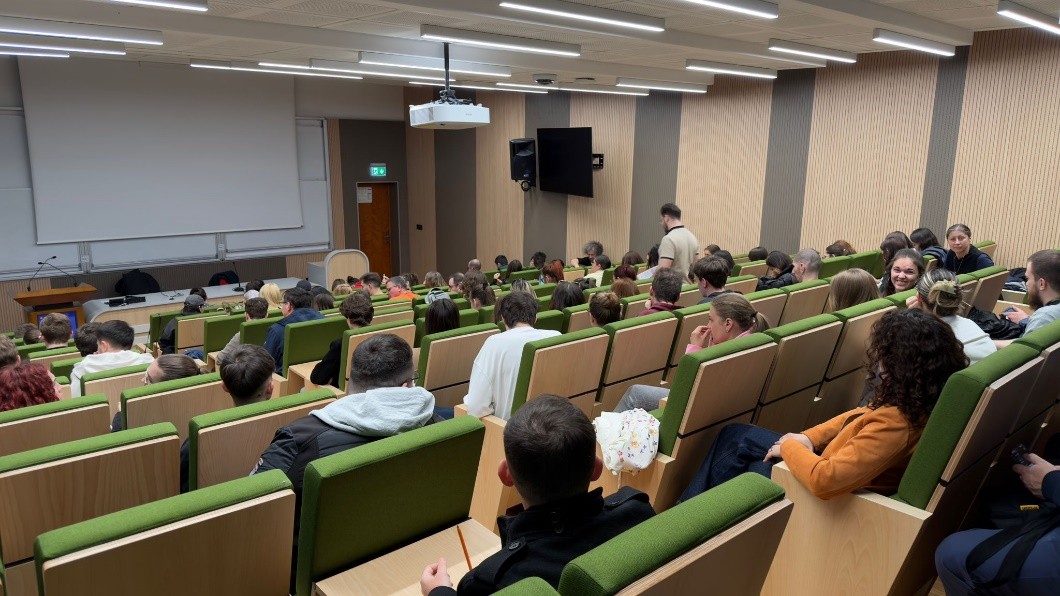
In Romania, the Teachers 4.0 Digital project, in which West University of Timisoara (WUT) is a partner, aimed to promote digital media literacy and combat misinformation with teachers, educators and students of educational sciences as target group. Teachers must have the knowledge and skills to enable their students to think critically, make informed choices online and stay safe. Therefore, during this 2nd semester of the academic year 2025-2026, WUT developed training courses for more than 200 students in educational sciences.
Media literacy education has been identified as a means to enhance the information capacity of individuals. Individuals can learn to criticize stereotypes, dominant values, and ideologies produced by the media and critically examine and evaluate media content through media literacy education. Moreover, media literacy education is believed to help counteract the media’s adverse effects. It refers to empowering to differentiate between fake news and accurate information and combat propaganda “which incites racism, hatred, conspiracy theories, violence, and radicalization” (Čiuladienė, et.al., 2023).
Creating skills in the context of media literacy education refers to being a responsible message creator and taking action to use the power of communication and information for social good (Hobbs et al., 2022). Furthermore, critical media literacy encompasses the ability to use the media as a tool for social transformation beyond critical text analysis, leading to the teaching of conscious effort towards the improvement of equality and justice, as well as to the creation of a better society.Interested in hearing about our future project activities, events and results? Stay in touch with us by subscribing to our newsletter here and following us on LinkedIn, Facebook and Instagram: @teachers4digitalage!
Cernicova-Buca, M., & Ciurel, D. (2022). Developing resilience to disinformation: A game-based method for future communicators. Sustainability, 14(9), 5438.
Čiuladienė, G., Gulevičiūtė, G., Latinytė, R., & Guogis, A. (2023). Promoting media literacy: Lithuanian students’ experience. Entrepreneurship and Sustainability Issues, 11(1), 282-292. doi: https://doi.org/10.9770/jesi.2023.11.1(17).
Hobbs, R., Moen, M., Tang, R., & Steager, P. (2022) Measuring the implementation of media literacy statewide: a validation study, Educational Media International, 59(3), 189-208. https://doi.org/10.1080/09523987.2022.2136083.
Raji T. O, Oladimeji O. A, & Akinyera M. B. (2025). Media Literacy in Education: Preparing Students for a Digital World. Journal of Educational Studies Trends and Practice, 8(8). https://doi.org/10.70382/sjestp.v8i8.028
Tropiano, L., & Reis, P. (2024). How to design an effective MOOC to promote media literacy: A study based on the Educational Design Research approach. Journal of Media Literacy Education, 16(3), 62-78. https://doi.org/10.23860/JMLE-2024-16-3-5.
Wuyckens, G., Landry, N., & Fastrez, P. (2022). Untangling media literacy, information literacy, and digital literacy: A systematic meta-review of core concepts in media education. Journal of Media Literacy Education, 14(1), 168-182. https://doi.org/10.23860/JMLE-2022-14-1-12. -
Developing Media Literacy as a Tool Against Disinformation: Policy Issues and Recommendations from the Roundtable Discussion
On 18 March 2026, Sofia University hosted a roundtable discussion dedicated to the development of digital and media literacy as an effective means of countering disinformation and manipulation. The event was organized in the framework of the international project Teachers in the Digital Age, a three-year initiative involving universities and partner organizations from across Southern Europe. The discussion brought together representatives of academia, school leadership, civil society, public media, and policy-related institutions to reflect on the Bulgarian results of the project and to outline practical and policy-oriented next steps.
Professor Danail Danov, Sofia University’s project lead, introduced the participants to the project’s main instruments, including the development of training content for both in-service and future teachers, as well as an interactive learning platform containing numerous tasks and practical case studies focused on different forms of disinformation and online manipulation. Dr. Katya Stoyanova from the Faculty of Educational Studies and the Arts, the project’s lead expert, presented the results achieved in Bulgaria over the past two years and highlighted the positive impact of the training on teachers’ confidence, practical skills, and readiness to apply digital and media literacy in their educational work.
A central conclusion of the discussion was that schools should take the leading role in developing digital and media literacy, but they cannot do so in isolation. Participants agreed that schools provide the most structured and inclusive environment for reaching children and young people, yet they need support, guidance, and continuity from a broader network of actors. In practice, this means cooperation between schools, universities, parents, media organizations, NGOs, and relevant public institutions. At the same time, the discussion clearly showed that such cooperation in Bulgaria remains fragmented. Participants repeatedly emphasized that many organizations work in the same direction, but often without sufficient coordination or visibility into one another’s efforts. This lack of sustained collaboration was identified as one of the major structural problems.
The roundtable strongly reaffirmed the key role of teachers. Teachers were seen not merely as users of educational content, but as the main mediators who can help students develop critical thinking, fact-checking habits, ethical judgment, and responsible online behavior. However, the participants also stressed that teachers need concrete support. According to the discussion, many teachers are willing to address media literacy, disinformation, online manipulation, and even AI-related challenges, but they often lack structured materials, practical examples, and methodological confidence. It was emphasized that teachers do not need more abstract theory alone; they need tools that can be integrated into everyday classroom practice without becoming an artificial “patch” in the lesson.
This is precisely where the project was seen as especially valuable. The training programme developed within Teachers in the Digital Age includes 10 modules, an online multilingual platform, lesson plans, case studies, practical tasks, and curated resources that remain accessible for at least five years. In Bulgaria, the training targeted both future teachers and in-service teachers. During the roundtable, it was reported that 126 in-service teachers had already successfully completed the training, with highly positive results. According to the presented evaluation data, participants demonstrated increased confidence in recognizing manipulative information, verifying facts, teaching digital and media literacy, and applying these skills in their own subject areas. Satisfaction with the course was reported to be very high, above 4.6 on a five-point scale.
One of the most important findings presented during the discussion was that the strongest impact came from the practice-oriented elements of the course. Teachers appreciated not only the theoretical clarification of key concepts, but especially the modules that showed how digital and media literacy could be embedded in real teaching situations. They valued examples of lesson planning, media analysis, fact-checking tools, and ways of adapting content across subjects such as languages, biology, geography, and primary education. The participants also noted that some teachers had already tested parts of the course content with their students and reported positive results. This confirmed that the project did not remain at the level of conceptual training but had already begun to influence classroom practice.
Type your paragraph here
At the same time, the discussion made clear that critical thinking remains one of the most difficult areas to develop systematically. While Bulgaria already has many digital educational resources available through publishing houses, NGOs, public institutions, and platforms such as the “Digital Backpack,” access to materials alone is not enough. Several participants argued that the real issue is not simply whether resources exist, but whether teachers know how to use them meaningfully. A recurring point in the discussion was that teachers need examples, guided practice, and locally relevant case studies. It was specifically noted that some international cases included in training materials are less effective for Bulgarian teachers because they are culturally distant. Participants therefore recommended developing more Bulgarian examples, school-based scenarios, and classroom cases that teachers can easily recognize and apply.
Another important theme was the relationship between media literacy, AI, and broader digital citizenship. Participants agreed that digital and media literacy can no longer be discussed separately from artificial intelligence, cybersecurity, and platform governance. Students live in an environment shaped by algorithms, social media, and AI-generated content, and schools are expected to prepare them for that environment. At the same time, participants warned against simplistic responses based only on bans or restrictions. For example, concerns were raised about proposals to ban phones in schools as a universal solution. Several speakers argued instead for an educational approach grounded in critical use, ethical awareness, and guided responsibility.
A particularly strong message from the roundtable concerned the policy vacuum at national level. Although many initiatives exist, participants repeatedly pointed to the absence of a coherent and sustained national policy. The Bulgarian political context was described as a major obstacle: short political cycles, frequent elections, unstable governments, and interrupted expert processes have prevented continuity. It was noted that media literacy falls across several policy domains—education, culture, media regulation, youth, social policy, and digital governance—without a stable mechanism for coordination. This fragmentation means that even when resources, expertise, and motivation exist, they are not effectively aligned.
Several participants argued that the Ministry of Education should assume a more central role, especially in integrating media literacy into everyday school practice. A concrete recommendation emerging from the discussion was the integration of the project’s modules and resources into school curricula, adapted to different educational levels. Yet the discussion also recognized that institutional action alone may not be sufficient. Reference was made to examples such as Finland and the Netherlands, where school-level autonomy and non-governmental educational structures play a stronger role. This led to an important conclusion: progress in Bulgaria will likely require both institutional commitment and flexible, network-based dissemination.
The roundtable therefore focused not only on policy critique but also on the practical question of scale: how can 200–300 trained teachers become much more? This question became one of the main organizing ideas of the discussion. Several concrete pathways were proposed. The Association of School Principals in Bulgaria was identified as a crucial dissemination partner because it has direct access to school leadership. The Media Literacy Coalition committed itself to helping distribute the platform and training content through its existing school and NGO networks. Sofia University stated that it would continue to provide access to the modules and platform content. The Bulgarian National Radio highlighted its potential role in popularizing the initiative and making media literacy resources more visible, including through digital channels, podcasts, and content formats attractive to younger audiences. Participants also proposed using teacher influencers, TikTok, and social media more strategically to reach both teachers and parents directly.
Another valuable recommendation was that schools should move toward whole-school approaches instead of leaving media literacy to isolated individual teachers. It was argued that teachers should work more collaboratively, define shared competences they want students to develop, and integrate these competences across subjects and age groups. This would make media literacy more visible, more systematic, and less dependent on individual initiative.
From a European policy perspective, the discussion pointed to the need for stronger accountability and follow-up mechanisms. It was emphasized that Bulgaria has obligations under European media legislation to report on media literacy measures, yet implementation remains inconsistent. This suggests that EU-level policy should continue encouraging member states not only to produce reports, but to create traceable, budgeted, and measurable policy frameworks with clear institutional responsibilities.
In conclusion, the roundtable showed broad consensus that digital and media literacy is no longer an optional educational add-on, but a democratic necessity. The discussion confirmed that teachers are central, that practical resources already exist, and that the project has produced a valuable training model with proven impact. At the same time, it made equally clear that isolated initiatives are not enough. What is needed now is a domino effect: stronger collaboration between universities, school leadership, coalitions, public media, and civil society, combined with clearer policy ownership at national level. The participants left the meeting with a shared commitment to continue dissemination of the platform and its resources and to transform the results of the project into a broader, more sustainable national effort.
From a European policy perspective, the discussion pointed to the need for stronger accountability and follow-up mechanisms. It was emphasized that Bulgaria has obligations under European media legislation to report on media literacy measures, yet implementation remains inconsistent. This suggests that EU-level policy should continue encouraging member states not only to produce reports, but to create traceable, budgeted, and measurable policy frameworks with clear institutional responsibilities.
In conclusion, the roundtable showed broad consensus that digital and media literacy is no longer an optional educational add-on, but a democratic necessity. The discussion confirmed that teachers are central, that practical resources already exist, and that the project has produced a valuable training model with proven impact. At the same time, it made equally clear that isolated initiatives are not enough. What is needed now is a domino effect: stronger collaboration between universities, school leadership, coalitions, public media, and civil society, combined with clearer policy ownership at national level. The participants left the meeting with a shared commitment to continue dissemination of the platform and its resources and to transform the results of the project into a broader, more sustainable national effort. -
Why Fighting Disinformation in Classrooms Is More Complex Than We Think
In today’s digital era, disinformation has become an integral part of the information landscape that students navigate every day. From social media feeds to online news platforms, young people are constantly exposed to a wide range of content which might be accurate, misleading, and everything in between.
Addressing this reality in the classroom is not a simple or immediate task. Rather, it requires a deeper understanding of how information is created, shared, and interpreted, as well as the development of critical approaches that evolve over time.
The Challenge of Information Overload
One of the most significant obstacles is the sheer volume of information available online. Students are constantly exposed to an overwhelming flow of content through social media, news platforms, and digital communities. This abundance makes it difficult not only to identify reliable sources but also to develop the patience and skills required for critical evaluation.
Research has shown that individuals often rely on heuristics, quick mental shortcuts, when processing large amounts of information, which can increase susceptibility to misinformation (Wineburg & McGrew, 2019). In such an environment, the issue is not simply access to information, but the ability to navigate it meaningfully.
Algorithms, Echo Chambers, and Filter Bubbles
Another layer of complexity lies in the structure of the digital ecosystem itself. Algorithms curate content based on users’ preferences, interactions, and prior behavior. While this personalization enhances user experience, it can also limit exposure to diverse perspectives.
As Pariser (2011) describes, “filter bubbles” can reinforce existing beliefs by repeatedly exposing users to similar viewpoints. For students, this means that disinformation is not always encountered as an obvious falsehood but often as content that aligns with what they already think or feel.
But what happens when students trust information not because it is reliable, but because it feels familiar?
This question highlights the deeper challenge educators face: helping students move beyond passive consumption toward critical and reflective engagement.Students’ Digital Habits and Practices
Students today are active participants in digital environments, but participation does not necessarily equate to critical understanding. Many rely on fast, surface-level consumption of information like scrolling, liking, and sharing content without deeper reflection.
Studies indicate that young people may struggle to evaluate the credibility of online information, particularly when content appears visually appealing or is shared by peers (McGrew et al., 2018). This highlights a key issue: digital familiarity does not automatically lead to digital literacy.
As one student from Teachers 4.0 Digital Age university course reflected: “I realized that fake news is not only something you see in politics or the media. It is everywhere…even in small everyday stories we share.”
The Evolving Role of the Teacher
In this complex landscape, the role of the teacher is also evolving. Educators are no longer simply transmitters of knowledge; they are facilitators who guide students in questioning, analyzing, and reflecting on information.
Teaching about disinformation requires more than presenting correct answers. It involves creating learning environments where students can explore ambiguity, engage in dialogue, and develop independent judgment. As the European Commission (2020) emphasizes, fostering critical thinking and digital competence is essential for active citizenship in democratic societies.
How Teachers 4.0 Digital Age Responds to This Challenge
Recognizing this complexity, the Teachers 4.0 Digital Age project: “Tackling Disinformation and Promoting Digital Literacy through Education and Training in European Classrooms” adopts a comprehensive approach to digital literacy education. Through its structured curriculum and interactive modules, the project goes beyond technical skills to support deeper engagement with the dynamics of disinformation.By combining theoretical insights with collaborative and reflective learning practices, the course encourages future educators to understand not only what disinformation is, but how and why it spreads and how it can be addressed meaningfully in the classroom.
A Continuous Process, not a One-Time Skill
Ultimately, combating disinformation is not a skill that can be mastered through a single lesson. It is an ongoing process that requires continuous reflection, adaptation, and critical engagement.
As another student noted: “I learned not only how to spot disinformation, but also how to question my own assumptions.”
The challenge is no longer simply to teach students what to think, but to help them learn how to think in an increasingly complex digital world.
Stay Connected
Are you interested in learning more about how Teachers 4.0 Digital Age supports educators in tackling disinformation and promoting digital literacy in European classrooms?
Stay updated on our latest developments, insights, and educational resources by following us on LinkedIn, Instagram, and Facebook and don’t forget to subscribe to our newsletter for upcoming updates!
References
European Commission. (2020). Digital Education Action Plan (2021–2027). Resetting education and training for the digital age. eur-lex.europa.eu/legal-content/EN/TXT/PDF/?uri=CELEX:52020DC0624
McGrew, S., Breakstone, J., Ortega, T., Smith, M., & Wineburg, S. (2018). Can Students Evaluate Online Sources? Learning From Assessments of Civic Online Reasoning. Theory & Research in Social Education, 46(2), 165–193. https://doi.org/10.1080/00933104.2017.1416320
Pariser, E. (2011). The filter bubble: What the Internet is hiding from you. penguin UK.
Wineburg, S., & McGrew, S. (2019). Lateral reading and the nature of expertise: Reading less and learning more when evaluating digital information. Teachers College Record, 121(11), 1-40. https://doi.org/10.1177/016146811912101102 -

Hello world twice!
Welcome to WordPress. This is your first post. Edit or delete it, then start writing!
-

Hello world thrice!
Welcome to WordPress. This is your first post. Edit or delete it, then start writing!
-
Beyond Digital Skills: Why Media Literacy Matters More Than Ever
Something new is happening in classrooms every day: students turn to digital systems to clarify a concept; teachers experiment with automated writing tools; homework assignments are shaped through interaction with Artificial Intelligence. What once seemed futuristic is now part of everyday educational life.
In this changing educational landscape, the key question is no longer whether schools should use technology, but how they can use it responsibly and meaningfully.
For years, “digital skills” were understood mainly as technical abilities — knowing how to use a platform, create a presentation, or search online. Today, that is no longer enough.
Digital technology is not just a tool; it is a cultural environment. It shapes how we think, communicate, learn, and build relationships. For this reason, the educational challenge has become deeper. It is not only about using technology correctly, but about understanding how it works, what its limits are, and what ethical questions it raises.
Being digitally literate does not simply mean being able to click, upload, or download. It means understanding how information is produced, selected, and prioritized. It means recognizing reliable sources, identifying misinformation, and asking critical questions about what we see and read online. Media literacy adds another layer: the ability to interpret messages, detect bias, and reflect on how narratives are constructed.
The role of schools is not to compete with machines, nor to ban them out of fear. It is to prepare people who can question technology, ask critical questions, recognize bias and manipulation, and evaluate the reliability of information. In other words, to develop critical thinking.
This is the context in which Teachers All Digital was created. The project focuses on supporting teachers not simply through technical training, but through professional and cultural growth. The idea is clear: to guide students in a complex digital world, educators need understanding, not just tools.
At the heart of the project lies a simple belief: technology is not neutral. Online spaces are shaped by algorithms, economic interests, and design choices that influence what we see and how we interact. Understanding these dynamics helps teachers regain agency and pass it on to their students.
Strengthening media literacy also means addressing the emotional dimension of digital life. Online interactions can amplify polarization, create echo chambers, and encourage rapid reactions rather than thoughtful dialogue. Schools can offer a different model: slowing down, verifying information, discussing perspectives, and practicing respectful communication.
Teachers All Digital promotes an integrated approach. It combines basic digital competences with ethical reflection, pedagogical design, and collaborative learning among educators. Teachers are encouraged to experiment with tools, but also to reflect on their impact. They explore how to design activities that foster inquiry, creativity, and critical analysis rather than passive consumption.
This approach has important implications for equity. Not all students have the same opportunities to develop digital awareness at home. When schools intentionally teach digital literacy and media literacy, they help reduce inequalities. They ensure that all learners — regardless of background — can access information critically and participate actively in digital society.
Another crucial aspect is professional confidence. Rapid technological change can create uncertainty among educators. New platforms emerge constantly, and expectations evolve quickly.
By focusing on underlying principles rather than specific tools, Teachers All Digital helps teachers build long-term competence. Instead of chasing trends, they develop criteria for evaluating new technologies and deciding when and how to use them.
In this sense, digital literacy is not an “extra” subject. It is intertwined with citizenship, language education, science, and social studies. It supports students in writing responsibly, researching effectively, collaborating ethically, and participating thoughtfully in public life.
Technology will continue to evolve, platforms will change, tools will be updated or replaced; but the need for critical thinking, ethical awareness, and informed judgment will remain constant.
Education has a unique role to play in this context. It cannot control the speed of digital innovation, but it can cultivate depth. It can create spaces where students learn to question, reflect, and engage with information consciously. It can transform digital skills from simple operational abilities into instruments of empowerment.
Investing in teachers’ digital and media literacy means strengthening the democratic function of schools. It means recognizing that access to technology is not enough; understanding is what truly makes participation possible.
The goal of Teachers All Digital is therefore clear: to support educators in becoming confident guides in a connected world. Because while technology provides access to information, only education provides the tools to interpret it.
And in a world shaped by digital communication, that ability may be one of the most important competences we can offer the next generation.