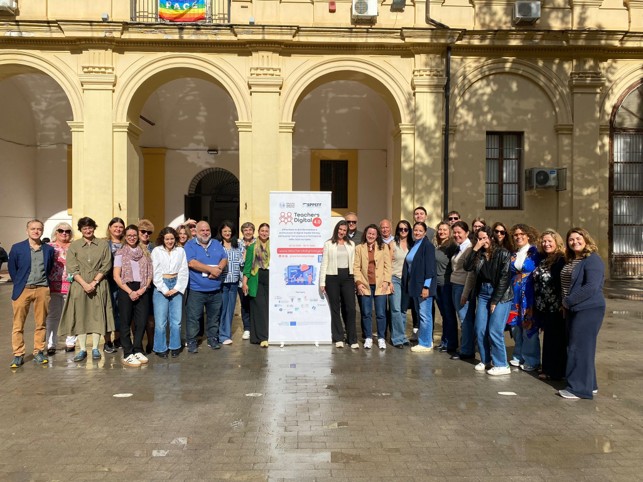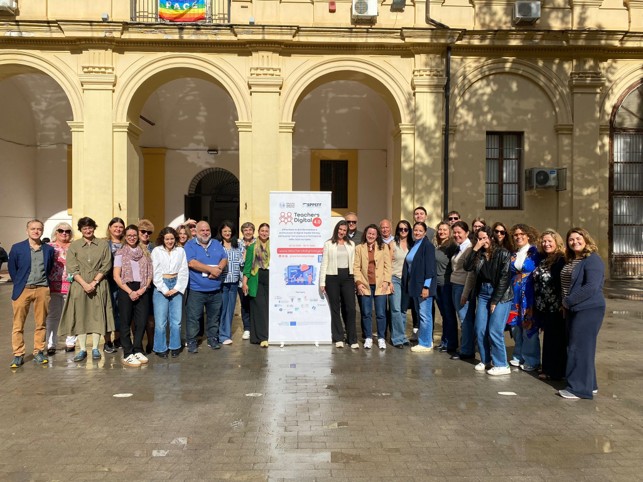
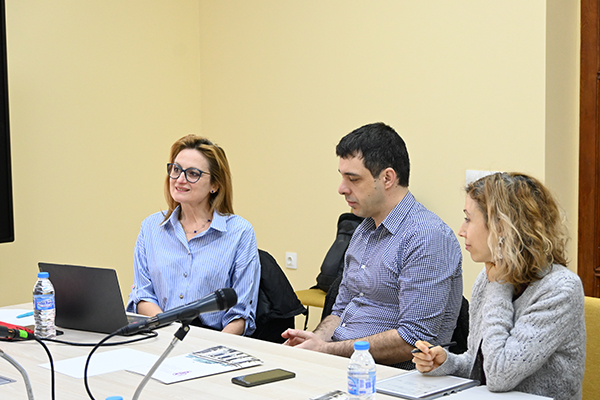
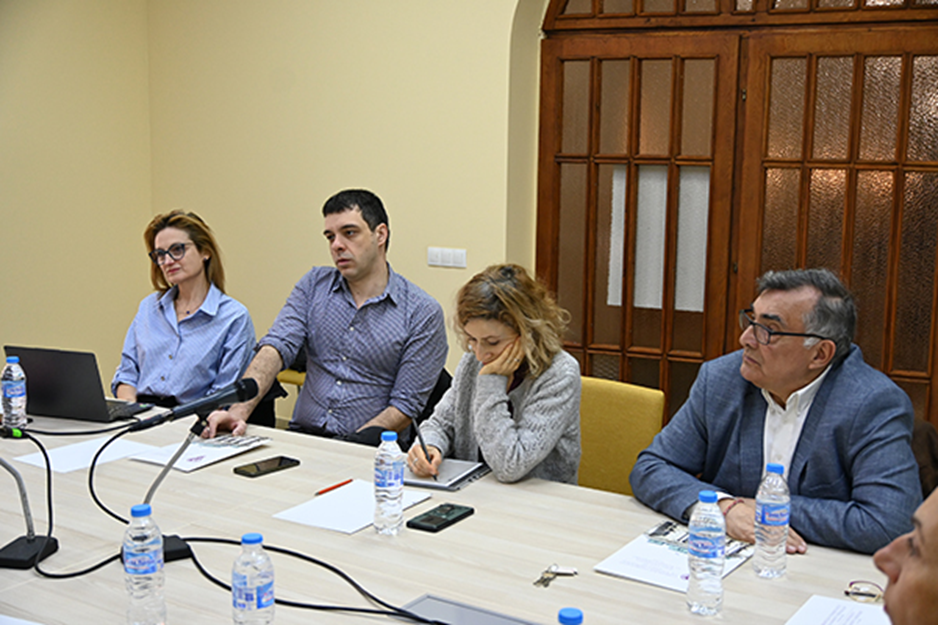
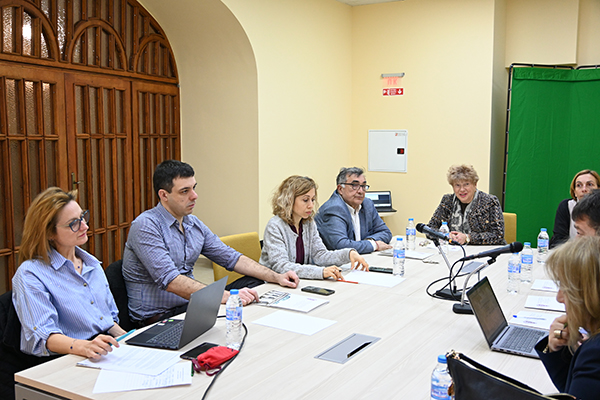
On 18 March 2026, Sofia University hosted a roundtable discussion dedicated to the development of digital and media literacy as an effective means of countering disinformation and manipulation. The event was organized in the framework of the international project Teachers in the Digital Age, a three-year initiative involving universities and partner organizations from across Southern Europe. The discussion brought together representatives of academia, school leadership, civil society, public media, and policy-related institutions to reflect on the Bulgarian results of the project and to outline practical and policy-oriented next steps.
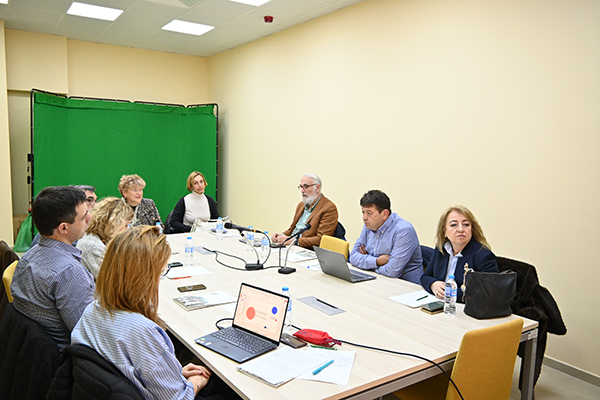
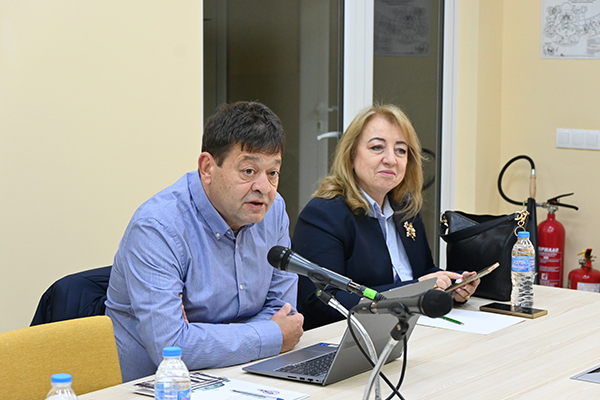
Professor Danail Danov, Sofia University’s project lead, introduced the participants to the project’s main instruments, including the development of training content for both in-service and future teachers, as well as an interactive learning platform containing numerous tasks and practical case studies focused on different forms of disinformation and online manipulation. Dr. Katya Stoyanova from the Faculty of Educational Studies and the Arts, the project’s lead expert, presented the results achieved in Bulgaria over the past two years and highlighted the positive impact of the training on teachers’ confidence, practical skills, and readiness to apply digital and media literacy in their educational work.
A central conclusion of the discussion was that schools should take the leading role in developing digital and media literacy, but they cannot do so in isolation. Participants agreed that schools provide the most structured and inclusive environment for reaching children and young people, yet they need support, guidance, and continuity from a broader network of actors. In practice, this means cooperation between schools, universities, parents, media organizations, NGOs, and relevant public institutions. At the same time, the discussion clearly showed that such cooperation in Bulgaria remains fragmented. Participants repeatedly emphasized that many organizations work in the same direction, but often without sufficient coordination or visibility into one another’s efforts. This lack of sustained collaboration was identified as one of the major structural problems.
The roundtable strongly reaffirmed the key role of teachers. Teachers were seen not merely as users of educational content, but as the main mediators who can help students develop critical thinking, fact-checking habits, ethical judgment, and responsible online behavior. However, the participants also stressed that teachers need concrete support. According to the discussion, many teachers are willing to address media literacy, disinformation, online manipulation, and even AI-related challenges, but they often lack structured materials, practical examples, and methodological confidence. It was emphasized that teachers do not need more abstract theory alone; they need tools that can be integrated into everyday classroom practice without becoming an artificial “patch” in the lesson.
This is precisely where the project was seen as especially valuable. The training programme developed within Teachers in the Digital Age includes 10 modules, an online multilingual platform, lesson plans, case studies, practical tasks, and curated resources that remain accessible for at least five years. In Bulgaria, the training targeted both future teachers and in-service teachers. During the roundtable, it was reported that 126 in-service teachers had already successfully completed the training, with highly positive results. According to the presented evaluation data, participants demonstrated increased confidence in recognizing manipulative information, verifying facts, teaching digital and media literacy, and applying these skills in their own subject areas. Satisfaction with the course was reported to be very high, above 4.6 on a five-point scale.
One of the most important findings presented during the discussion was that the strongest impact came from the practice-oriented elements of the course. Teachers appreciated not only the theoretical clarification of key concepts, but especially the modules that showed how digital and media literacy could be embedded in real teaching situations. They valued examples of lesson planning, media analysis, fact-checking tools, and ways of adapting content across subjects such as languages, biology, geography, and primary education. The participants also noted that some teachers had already tested parts of the course content with their students and reported positive results. This confirmed that the project did not remain at the level of conceptual training but had already begun to influence classroom practice.
At the same time, the discussion made clear that critical thinking remains one of the most difficult areas to develop systematically. While Bulgaria already has many digital educational resources available through publishing houses, NGOs, public institutions, and platforms such as the “Digital Backpack,” access to materials alone is not enough. Several participants argued that the real issue is not simply whether resources exist, but whether teachers know how to use them meaningfully. A recurring point in the discussion was that teachers need examples, guided practice, and locally relevant case studies. It was specifically noted that some international cases included in training materials are less effective for Bulgarian teachers because they are culturally distant. Participants therefore recommended developing more Bulgarian examples, school-based scenarios, and classroom cases that teachers can easily recognize and apply.
Another important theme was the relationship between media literacy, AI, and broader digital citizenship. Participants agreed that digital and media literacy can no longer be discussed separately from artificial intelligence, cybersecurity, and platform governance. Students live in an environment shaped by algorithms, social media, and AI-generated content, and schools are expected to prepare them for that environment. At the same time, participants warned against simplistic responses based only on bans or restrictions. For example, concerns were raised about proposals to ban phones in schools as a universal solution. Several speakers argued instead for an educational approach grounded in critical use, ethical awareness, and guided responsibility.
A particularly strong message from the roundtable concerned the policy vacuum at national level. Although many initiatives exist, participants repeatedly pointed to the absence of a coherent and sustained national policy. The Bulgarian political context was described as a major obstacle: short political cycles, frequent elections, unstable governments, and interrupted expert processes have prevented continuity. It was noted that media literacy falls across several policy domains—education, culture, media regulation, youth, social policy, and digital governance—without a stable mechanism for coordination. This fragmentation means that even when resources, expertise, and motivation exist, they are not effectively aligned.
Several participants argued that the Ministry of Education should assume a more central role, especially in integrating media literacy into everyday school practice. A concrete recommendation emerging from the discussion was the integration of the project’s modules and resources into school curricula, adapted to different educational levels. Yet the discussion also recognized that institutional action alone may not be sufficient. Reference was made to examples such as Finland and the Netherlands, where school-level autonomy and non-governmental educational structures play a stronger role. This led to an important conclusion: progress in Bulgaria will likely require both institutional commitment and flexible, network-based dissemination.
The roundtable therefore focused not only on policy critique but also on the practical question of scale: how can 200–300 trained teachers become much more? This question became one of the main organizing ideas of the discussion. Several concrete pathways were proposed. The Association of School Principals in Bulgaria was identified as a crucial dissemination partner because it has direct access to school leadership. The Media Literacy Coalition committed itself to helping distribute the platform and training content through its existing school and NGO networks. Sofia University stated that it would continue to provide access to the modules and platform content. The Bulgarian National Radio highlighted its potential role in popularizing the initiative and making media literacy resources more visible, including through digital channels, podcasts, and content formats attractive to younger audiences. Participants also proposed using teacher influencers, TikTok, and social media more strategically to reach both teachers and parents directly.
Another valuable recommendation was that schools should move toward whole-school approaches instead of leaving media literacy to isolated individual teachers. It was argued that teachers should work more collaboratively, define shared competences they want students to develop, and integrate these competences across subjects and age groups. This would make media literacy more visible, more systematic, and less dependent on individual initiative.
From a European policy perspective, the discussion pointed to the need for stronger accountability and follow-up mechanisms. It was emphasized that Bulgaria has obligations under European media legislation to report on media literacy measures, yet implementation remains inconsistent. This suggests that EU-level policy should continue encouraging member states not only to produce reports, but to create traceable, budgeted, and measurable policy frameworks with clear institutional responsibilities.
In conclusion, the roundtable showed broad consensus that digital and media literacy is no longer an optional educational add-on, but a democratic necessity. The discussion confirmed that teachers are central, that practical resources already exist, and that the project has produced a valuable training model with proven impact. At the same time, it made equally clear that isolated initiatives are not enough. What is needed now is a domino effect: stronger collaboration between universities, school leadership, coalitions, public media, and civil society, combined with clearer policy ownership at national level. The participants left the meeting with a shared commitment to continue dissemination of the platform and its resources and to transform the results of the project into a broader, more sustainable national effort.
From a European policy perspective, the discussion pointed to the need for stronger accountability and follow-up mechanisms. It was emphasized that Bulgaria has obligations under European media legislation to report on media literacy measures, yet implementation remains inconsistent. This suggests that EU-level policy should continue encouraging member states not only to produce reports, but to create traceable, budgeted, and measurable policy frameworks with clear institutional responsibilities.
In conclusion, the roundtable showed broad consensus that digital and media literacy is no longer an optional educational add-on, but a democratic necessity. The discussion confirmed that teachers are central, that practical resources already exist, and that the project has produced a valuable training model with proven impact. At the same time, it made equally clear that isolated initiatives are not enough. What is needed now is a domino effect: stronger collaboration between universities, school leadership, coalitions, public media, and civil society, combined with clearer policy ownership at national level. The participants left the meeting with a shared commitment to continue dissemination of the platform and its resources and to transform the results of the project into a broader, more sustainable national effort.