
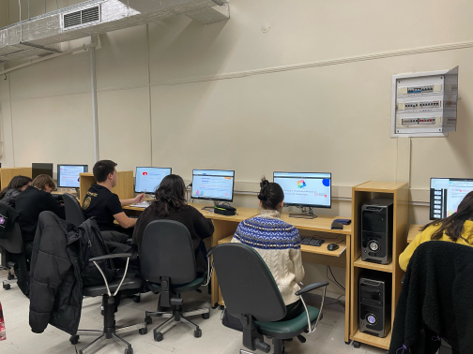
In an age when disinformation spreads faster than ever and the line between reliable and misleading information grows increasingly blurred, the ability to think critically about digital content has become an essential skill nowhere more so than in the classroom. It was precisely this challenge that the Teachers 4.0 Digital Age project set out to address, and over the past two academic years its results have taken concrete shape through the delivery of a dedicated university course across six European partner institutions.
From Bulgaria and Italy to Romania, Poland, Cyprus and Greece, more than 1,200 university students, the great majority of them preparing to become teachers, took part in the course. Although each partner university adapted the delivery to its own students and traditions, all worked from the same shared curriculum – ten learning units that guided students from the foundations of the topic through to practical classroom application:
- Introduction
- Disinformation: What Are We Talking About?
- More Key Terms and Definitions
- Setting the Scene for Teaching and Learning in the Digital School Environment
- Assessing and Evaluating Digital Media Literacy in Schools
- Explore the Key Media Practices of Children and Students
- Teaching Digital Media Literacy and Disinformation
- Building Digital Media Literacy Competences in the Classroom: Becoming Digital Citizens
- Students in All Their Diversity
- Practical Examples of Lesson Plans
Some partners offered this curriculum as an intensive, hands-on laboratory course; others as workshop-based seminars, hybrid or fully online modules, or as part of existing degree program. This variety turned out to be one of the project’s real strengths: it showed that the curriculum works not only in ideal conditions, but across the diverse and everyday realities of European higher education.
To understand what students actually gained from the experience, the project accompanied the course with a careful evaluation. Before and after the course, students completed questionnaires exploring their knowledge of key digital concepts and their confidence in a range of digital competences. At the end, many also reflected on the course itself, responding to both closed questions, rating their agreement with a series of statements, and open-ended ones, where they could describe in their own words what they had valued and what could be improved. Together, these instruments offered a rich, multi-layered picture of the course’s impact, combining measurable change with the students’ own voices.
The findings were consistent and encouraging across all six countries. Students reported the greatest progress precisely where they had begun with the least knowledge: the specialized language of disinformation, terms such as deepfakes, filter bubbles and fake news, which many had encountered only vaguely before the course, and which they came to understand with real confidence by its end. Beyond knowledge, they rated the course highly for its relevance, quality and enjoyment, and a clear majority expressed their intention to carry what they had learned into their own future classrooms, helping their pupils to navigate the digital world more critically and safely.
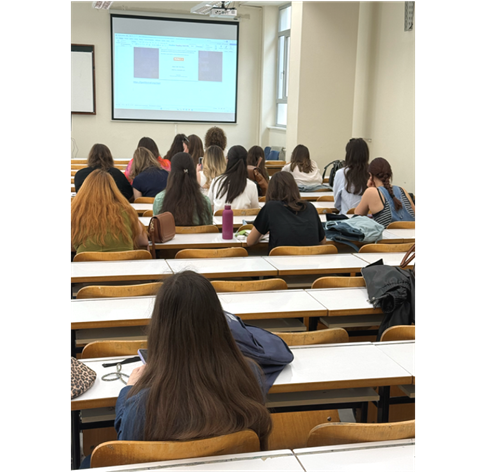
Perhaps most telling were the students’ own reflections. Repeatedly, they highlighted the practical, hands-on character of the course with the interactive activities, the real-world examples, the collaborative group work and the ready-to-use lesson plans as what made abstract ideas concrete and immediately teachable. Their suggestions for the future were equally constructive: more contemporary examples drawn from social media and current events, richer collections of classroom-ready materials, and resources adaptable to different age groups and to schools with varying levels of technology.
Taken as a whole, the experience points to a hopeful conclusion. A well-designed, practically grounded course on critical digital literacy is not only feasible but genuinely welcomed by the next generation of teachers. Equipped with new concepts, practical tools and a sharper critical eye and, above all, motivated to pass these on, these future educators leave the course better prepared to help their students meet one of the defining challenges of our time.