Category: News

  • Building Digital Resilience: How Teachers 4.0 Digital Expands Mediawise Society’s Mission to Strengthen Democracy

    Building Digital Resilience: How Teachers 4.0 Digital Expands Mediawise Society’s Mission to Strengthen Democracy

    Author: Anca Velicu

    The global rise of digital technologies, disinformation, and declining trust in democratic institutions presents significant challenges to educators. Teachers must now adapt their methods to equip students with the skills necessary to navigate an ever-changing world. The Teachers 4.0 Digital project, aimed at upskilling educators in media and digital literacy while teaching students how to recognise disinformation, stands at the heart of these challenges.

    Although, undoubtedly, disinformation is a global threat, some countries are more vulnerable than others and, among European countries, Romania seems to qualify as one of the most vulnerable. Thus, Romania’s low rates of digital and media literacy present significant challenges for its citizens and society. In 2023, only 28% of Romanians aged 16 to 74 had basic digital skills, lagging far behind the EU average of 55% (Eurostat, 2024). Moreover, the European Media Literacy Index 2023 ranked Romania fourth out of five clusters, indicating low levels of media literacy (Lessenski, 2023). This lack of digital and media education may very well be one of the contributing factors to the spread of disinformation and social polarization.

    Given its history of state-controlled media and propaganda, Romania faces important challenges in cultivating a critical and informed citizenry. Media education projects, such as Teachers 4.0 Digital, are therefore essential to equip individuals with the skills to navigate a complex media landscape and be able to discern between reliable and biased information. Nicoleta Fotiade, founder and president of Mediawise Society, after experiencing European partnerships in media education over 20 years span, says: “These types of European partnerships help promote media literacy education at different ages and educational levels and encourage media users to practice their critical thinking skills, the most constructive way so far to downplay the spread of disinformation online and offline.”

    These projects can help counter the legacy of ex-communist countries and promote media literacy, fostering a more resilient and democratic society, fighting against the pervasive influence of disinformation and propaganda (Lessenski, 2023).

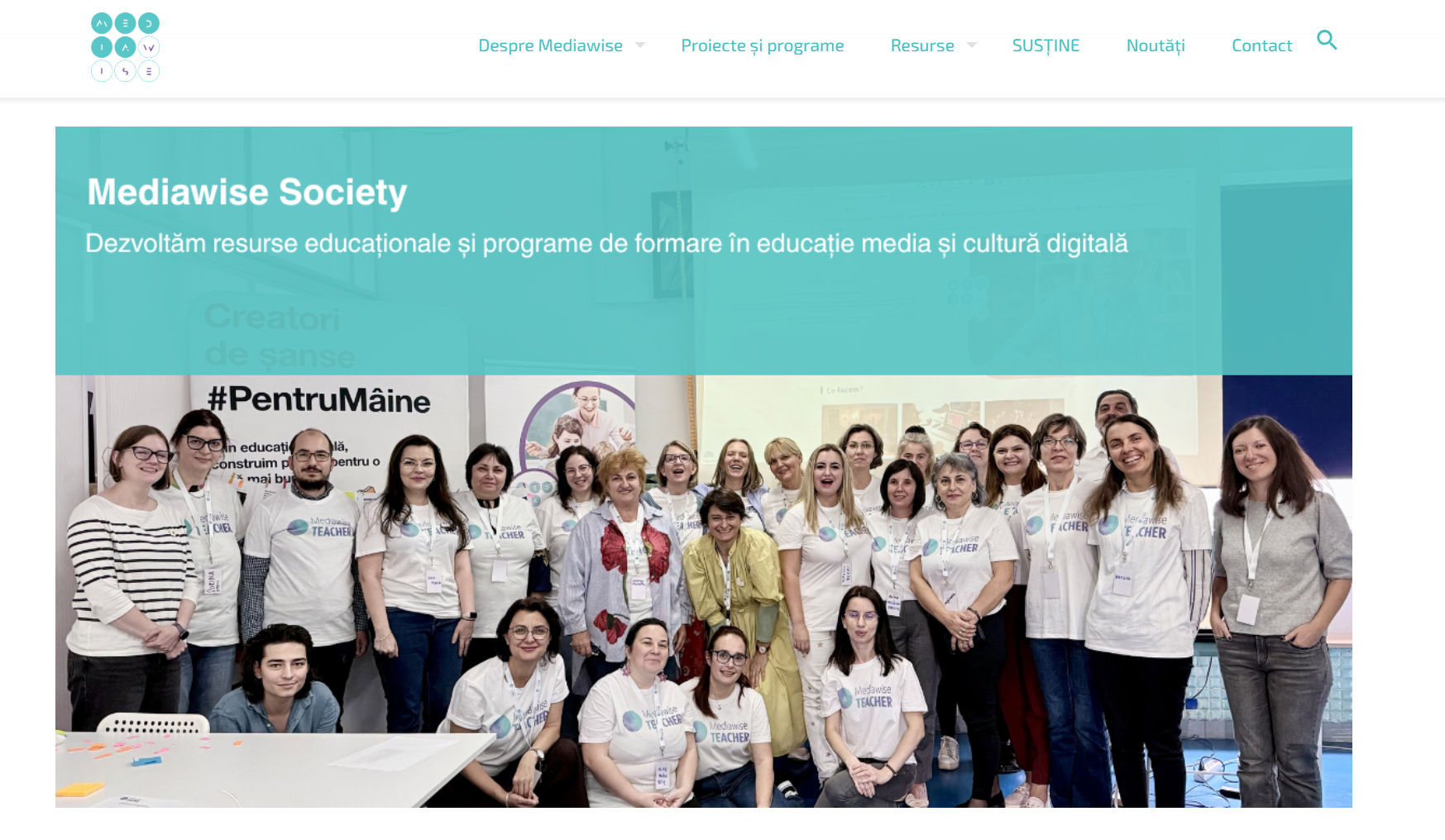
    In this context, the experience of Mediawise Society, one of the Romanian partners in the project, is of paramount importance. This article explores how Mediawise Society’s past and current projects can inform and support the objectives of Teachers 4.0 Digital. Focusing on three projects that Mediawise Society has been developing (namely Changing Democracy, Mind Over Media and Mediawise Teachers), we’ll showcase how its decade-long work on democracy, media influence, propaganda, and media literacy synergizes with the Teachers 4.0 Digital initiative. Ultimately, this article argues that Teachers 4.0 Digital fits perfectly into Mediawise’s ongoing mission and teaching and training programs to build and empower a national community of media educators equipped to promote and protect civic and democratic values in Romania while teaching media education.

    Changing Democracies and Teachers 4.0 Digital

    The Changing Democracies project (2023-2025, funded by the EU’s CERV programme) aims to foster a deeper understanding of the democratic crisis by examining Europe’s history with communism, dictatorship, resistance, and democratic transitions. By interviewing witnesses and offering educational resources, this project encourages reflection on democracy’s current state and explores how active citizenship can be nurtured.

    Several valuable lessons from Changing Democracies are directly applicable to Teachers 4.0 Digital. One such lesson is using historical context to foster critical thinking. By understanding the transitions from authoritarianism to democracy, educators can help students recognize how fragile democracy can be. This understanding can be incorporated into the Teachers 4.0 Digital curriculum to highlight present-day threats to democracy, drawing parallels between past and current challenges.

    In an age of rising polarization and authoritarian tendencies, this type of historical literacy is vital. By understanding the roots of democratic decline, students can develop critical thinking skills that are essential for identifying extremist propaganda in the digital age.

    Mind Over Media and Teachers 4.0 Digital

    Mind Over Media (2016-2020, funded by the EC DG Connect) tackled the pervasive influence of modern propaganda and emphasized the need for education that helps individuals recognize and respond to it. Today, propaganda is more subtle and omnipresent, making it crucial for students to develop critical thinking skills.

    Key intersections between Mind Over Media and Teachers 4.0 Digital include the focus on critical thinking and media literacy. Mind Over Media teaching methods and educational materials engage students in discussions about propaganda, providing an ideal foundation for Teachers 4.0 Digital, which aims to foster digital literacy and recognize and take action against disinformation in today’s media-saturated environment. The approaches and tools developed in Mind Over Media can be seamlessly integrated into the Teachers 4.0 Digital curriculum, equipping students and teachers alike with the skills to resist manipulation and disinformation.

    Additionally, both projects recognize the critical role educators play in shaping students’ understanding of media, media use and democracy. By empowering teachers with knowledge and pedagogical tools, Mind Over Media laid the groundwork for Teachers 4.0 Digital, which seeks to further prepare teachers to guide students through the complexities of digital citizenship and media consumption.

    MEDIAWISE4all and Teachers 4.0 Digital

    Starting 2023, MEDIAWISE4all is the pivotal leadership programme of Mediawise Society aiming at developing a community of media educators (teachers, trainers and even librarians or any other educational professionals) to integrate media education in formal and non-formal teaching contexts across Romania. So far, in order to achieve this ambitious scope in a context where very few media educators have training experience in Romania, the programme focuses on two main components: Mediawise Community (Training of Trainers) and Mediawise Teachers Professional Development Component.

    The Mediawise Community targets professionals such as librarians, NGO workers, and educators, providing training contexts to learn how to teach media education. While Mediawise Teachers focuses specifically on the professional development of primary, secondary, and high school teachers, helping them integrate media education across curriculum. By co-creating learning scenarios, this programme encourages educators to foster critical media engagement in their classrooms with the support of an integrated mentorship scheme during the whole school year.

    The foundation laid by MEDIAWISE4all aligns directly with Teachers 4.0 Digital, which shares the mission of empowering educators with the skills and knowledge needed to foster critical thinking, media literacy, and digital resilience among students. The Teachers 4.0 Digital project builds on MEDIAWISE4all’s legacy by providing a specialised focus on recognizing disinformation in the digital media.

    Mediawise Society’s Role in Teachers 4.0 Digital

    The Teachers 4.0 Digital project fits seamlessly into Mediawise Society’s decade-long efforts to promote media literacy and strengthen democratic values. Through initiatives like Changing Democracies, Mind Over Media, and MEDIAWISE4all, Mediawise has been creating a community of educators prepared to tackle disinformation and media manipulation.

    Together, these projects demonstrate the critical role that media literacy education plays in supporting a healthy democracy, showing how the Teachers 4.0 Digital project enhances and continues Mediawise Society’s mission to create a strong community of media educators in Romania.

    References

    Eurostat (2024). Digital skills in 2023: impact of education and age (22 February). https://ec.europa.eu/eurostat/web/products-eurostat-news/w/ddn-20240222-1#:~:text=In%202023%2C%2055%25%20of%20people,Netherlands%20to%2028%25%20in%20Romania.

    Lessenski, M. (2023). “Bye, bye, birdie”: Meeting the Challenges of Disinformation. The Media Literacy Index 2023. Policy Brief. Sofia, Open Society Institute – Sofia (June) Retrieved from https://osis.bg/wp-content/uploads/2023/06/MLI-report-in-English-22.06.pdf.

  • Back to work after the summer break: Check out our new project leaflet!

    Back to work after the summer break: Check out our new project leaflet!

    The Teachers 4.0 Digital project proudly completed its first nine months on its mission to launch a large-scale capacity- building activity for initial training and continuous professional development of teachers and educators on digital media literacy in a selection of countries that need to bridge this gap: Bulgaria, Cyprus, Greece, Italy, Poland and Romania.

    During this time, our partners worked on the development of a comprehensive curriculum to guide teachers and educators on how to help their students gain the necessary skills to thrive in the digital age. As the summer break is just over, we are looking forward to the finalisation of the curriculum and development of our e-learning platform so that we can launch our courses by the end of the year!

    We invite you to check out our new project leaflet to have a quick idea about what we are working on.

  • New School Curricula in Greece Embrace Digital Media Literacy

    New School Curricula in Greece Embrace Digital Media Literacy

    During the school years 2021-2022 and 2022-2023, one of the Teachers 4.0 Digital project partners, the Institute of Educational Policy (IEP) proceeded with the implementation of the action “Pilot Implementation of Curricula in Primary and Secondary Education”. This action was carried out within the framework of the Actions “Upgrading of Curricula and Creation of Educational Materials in Primary and Secondary Education” and “Training of Teachers in Curricula and Educational Materials in Primary and Secondary Education”.

    At all levels of education, from pre-school to secondary education, the term digital media literacy has become an integral part of curricula in many countries around the world, starting from the early stages of education. In an era of constant technological developments, the need to develop critical thinking and discern reliable information is imperative. The overload of information and news often creates confusion, making the ability to filter and evaluate the necessary sources.

    In this context, teachers and students need to be prepared with the relevant knowledge and skills to develop critical thinking and assess the validity of information. Combating misinformation requires technology and media training from the earliest school level in order to combine information and news literacy. Through the new curricula for primary and secondary education, the need to cultivate the ability of each individual to approach new information and communication technologies (ICT) critically is highlighted.

    Digital literacy encompasses a wide range of skills that students need to master, and relates to the use of ICT for:

    1. Searching, collecting, evaluating and managing information from various sources.

    2. Creating digital content and new information.

    3. Communicating and sharing information with others in order to build knowledge and solve problems.

    The concept of information literacy is complementary to digital literacy and involves a deep knowledge of basic concepts of information technology and the operation of computer technology. In modern curricula, both digital and information literacy are considered to be subjects of similar importance to language, mathematics and science literacy. The curriculum of the course “Computer Science and Information and Communication Technologies (ICT)” adopts the philosophy of the Interdisciplinary Integrated Curriculum Framework from pre-school to high school and is based on modern scientific research and teaching approaches, emphasizing cross-cutting principles such as inclusion and enhancing the participation of all students in Computer Science. In addition, it promotes education with respect for diversity and cultures, the connection of the course with the real world and everyday life, pedagogical flexibility and openness (freedom from dependence on specific technologies, tools and platforms), as well as exploration, collaboration and interdisciplinarity. Finally, the curriculum of this course follows a set of specific principles, aiming to form the basis for the education of the future citizens of our country (IEP, 2021b).

    Educational activities related to digital and information literacy include the exposure of students to digital technologies and information technology, as well as the understanding of their role in modern society and culture. From 2021, the compulsory timetables of all Kindergartens, Primary and Secondary Schools will also include Skills Workshops 21+, which aim to enhance the cultivation of life, technology and science skills.

    Skills Workshops are an innovative teaching and learning activity, which introduces new thematic units with an emphasis on skills. Their basic principle is to link the curriculum’s field of knowledge with the development of students’ basic skills in order to shape responsible citizens. Skills are grouped and cultivated in four targeting cycles:

    1. 21st century skills.

    2. Life skills.

    3. Technology, engineering and science skills.

    4. Skills of the mind.

    The technology skills category includes workshops that develop digital and information literacy skills, technological literacy and safe internet navigation skills.

    Our students are part of a global digital community, where they are daily exposed to news and information that needs to be evaluated for quality. The goal is for students, as consumers and creators of information, to acquire critical thinking and digital literacy skills, making them responsible citizens in the global digital community. Digital competences are essential in all aspects of life, whether social, personal, professional or leisure. The digital divide creates conditions of exclusion and a democratic deficit, as it does not allow equal access for citizens. Developing digital literacy improves citizenship and is a key objective for a modern democratic society.

    The IEP and the Teachers 4.0 Digital Age

    IEP is a scientific and research institution that supports the Ministry of Education, Religious Affairs and Sports (MTEF) in primary and secondary education, teacher training and addressing educational inequalities. IEP participates in the Teachers 4.0 Digital project, which offers teachers in Greece the opportunity to be trained in digital literacy and countering misinformation. This project is an important opportunity for the professional development of teachers, enhancing their digital literacy and critical thinking skills. They will in turn act as multipliers of knowledge, transferring it in a constructive way to their colleagues for use in classrooms.

    Teachers 4.0 Digital empowers teachers in primary and secondary schools across Europe, promoting digital media literacy and tackling misinformation. This is a large-scale activity focused mainly in Bulgaria, Cyprus, Greece, Italy, Poland, Cyprus, Greece and Romania.

    References:

    Εργαστήρια Δεξιοτήτων. Ινστιτούτο Εκπαιδευτικής Πολιτικής. https://iep.edu.gr/el/psifiako-apothetirio/skill-labs 

    Ινστιτούτο Εκπαιδευτικής Πολιτικής (2021). Πρόγραμμα Σπουδών για το μάθημα Πληροφορική και Τεχνολογίες της Πληροφορίας και Επικοινωνιών Δημοτικού. https://iep.edu.gr/el/nea-ps-provoli

    Νέα Προγράμματα Σπουδών – Αρχική σελίδα. Ινστιτούτο Εκπαιδευτικής Πολιτικής. https://iep.edu.gr/el/nea-programmata-spoudon-arxiki-selida 

    Παπαδημητρίου, Σ. (2016). Εγγραμματισμός στα Μέσα: Προσεγγίζοντας το Σχολείο του 21ου Αιώνα. Στα Πρακτικά του 1ου Πανελληνίου Συνεδρίου «Προγράμματα Σπουδών – Σχολικά εγχειρίδια: Από το παρελθόν στο παρόν και το μέλλον». Αθήνα, 2016.

  • Digital literacy in Greece through the new Curricula

    Digital literacy in Greece through the new Curricula

    During the school years 2021-2022 and 2022-2023, the Institute of Educational Policy (IEP) proceeded with the implementation of the action “Pilot Implementation of Curricula in Primary and Secondary Education”. This action was carried out within the framework of the Actions “Upgrading of Curricula and Creation of Educational Materials in Primary and Secondary Education” and “Training of Teachers in Curricula and Educational Materials in Primary and Secondary Education”. At all levels of education, from pre-school to secondary education, the term digital literacy has become an integral part of curricula in many countries around the world, starting from the early stages of education. In an era of constant technological developments, the need to develop critical thinking and discern reliable information is imperative. The overload of information and news often creates confusion, making the ability to filter and evaluate sources necessary. In this context, teachers and students need to be prepared with the necessary knowledge and skills to develop critical thinking and assess the validity of information. Combating misinformation requires technology and media training from the earliest school level in order to combine information and news literacy. Through the new curricula for primary and secondary education, the need to cultivate the ability of each individual to approach new information and communication technologies (ICT) critically is highlighted. Digital literacy encompasses a wide range of skills that students need to master, and relates to the use of ICT for: 1.         Searching, collecting, evaluating and managing information from various sources. 2.         Creating digital content and new information. 3.         Communicating and sharing information with others in order to build knowledge and solve problems.

    The concept of information literacy is complementary to digital literacy and involves a deep knowledge of basic concepts of information technology and the operation of computer technology. In modern curricula, both digital and information literacy are considered to be subjects of similar importance to language, mathematics and science literacy. The curriculum of the course “Computer Science and Information and Communication Technologies (ICT)” adopts the philosophy of the Interdisciplinary Integrated Curriculum Framework from pre-school to high school and is based on modern scientific research and teaching approaches, emphasizing cross-cutting principles such as inclusion and enhancing the participation of all students in Computer Science. In addition, it promotes education with respect for diversity and cultures, the connection of the course with the real world and everyday life, pedagogical flexibility and openness (freedom from dependence on specific technologies, tools and platforms), as well as exploration, collaboration and interdisciplinarity. Finally, the curriculum of this course follows a set of specific principles, aiming to form the basis for the education of the future citizens of our country (IEP, 2021b).

    Educational activities related to digital and information literacy include the exposure of students to digital technologies and information technology, as well as the understanding of their role in modern society and culture. From 2021, the compulsory timetables of all Kindergartens, Primary and Secondary Schools will also include Skills Workshops 21+, which aim to enhance the cultivation of life, technology and science skills (ΦΕΚ 3567/04.08.21_ Πλαίσιο Προγράμματος Σπουδών Εργαστηρίων δεξιοτήτων). Skills Workshops are an innovative teaching and learning activity, which introduces new thematic units with an emphasis on skills. Their basic principle is to link the curriculum’s field of knowledge with the development of students’ basic skills in order to shape responsible citizens. Skills are grouped and cultivated in four targeting cycles:
    1. 21st century skills.
    2. 21st century life skills.
    3. Technology, engineering and science skills.
    4. Skills of the mind.
    The technology skills category includes workshops that develop digital and information literacy skills, technological literacy and safe internet navigation skills.

    Our students are part of a global digital community, where they are daily exposed to news and information that needs to be evaluated for quality. The goal is for students, as consumers and creators of information, to acquire critical thinking and digital literacy skills, making them responsible citizens in the global digital community. Digital competences are essential in all aspects of life, whether social, personal, professional or leisure. The digital divide creates conditions of exclusion and a democratic deficit, as it does not allow equal access for citizens. Developing digital literacy improves citizenship and is a key objective for a modern democratic society.

    The IEP and the Teachers 4.0 Digital Age
    The Institute of Education Policy (IEP) is a scientific and research institution that supports the Ministry of Education, Religious Affairs and Sports (MTEF) in primary and secondary education, teacher training and addressing educational inequalities. IEP participates in the Teachers 4.0 Digital project, which offers teachers in Greece the opportunity to be trained in digital literacy and countering misinformation. This project is an important opportunity for the professional development of teachers, enhancing their digital literacy and critical thinking skills. They will in turn act as multipliers of knowledge, transferring it in a constructive way to their colleagues for use in classrooms.
    Teachers 4.0 Digital empowers teachers in primary and secondary schools across Europe, promoting digital literacy and tackling misinformation in their classrooms. This is a large-scale activity focused mainly in Bulgaria, Cyprus, Greece, Italy, Poland, Cyprus, Greece and Romania.

    References:
    Εργαστήρια Δεξιοτήτων. Ινστιτούτο Εκπαιδευτικής Πολιτικής. https://iep.edu.gr/el/psifiako-apothetirio/skill-labs 
    Ινστιτούτο Εκπαιδευτικής Πολιτικής (2021). Πρόγραμμα Σπουδών για το μάθημα Πληροφορική και Τεχνολογίες της Πληροφορίας και Επικοινωνιών Δημοτικού. https://iep.edu.gr/el/nea-ps-provoli
    Νέα Προγράμματα Σπουδών – Αρχική σελίδα. Ινστιτούτο Εκπαιδευτικής Πολιτικής. https://iep.edu.gr/el/nea-programmata-spoudon-arxiki-selida 
    Παπαδημητρίου, Σ. (2016). Εγγραμματισμός στα Μέσα: Προσεγγίζοντας το Σχολείο του 21ου Αιώνα. Στα Πρακτικά του 1ου Πανελληνίου Συνεδρίου «Προγράμματα Σπουδών – Σχολικά εγχειρίδια: Από το παρελθόν στο παρόν και το μέλλον». Αθήνα, 2016.

  • Digitalization, its Challenges to Education, and Possible Responses: The Case of Teachers 4.0 Digital project

    Digitalization, its Challenges to Education, and Possible Responses: The Case of Teachers 4.0 Digital project

    Digitalization presents the world with new opportunities, but also with significant challenges. Digital technologies can have both beneficial and adverse effects on their users. This dual nature is encapsulated by the term “pharmakon”, as described by contemporary thinker of technology Bernard Stiegler (2010; 2012), since in Greek, pharmakon denotes both a poison and a cure, reflecting thus the dual characteristics of digital technologies.

    Stiegler’s work offers valuable insights on the impact of digitalization on education and society. He argues that digital technologies transform not only the way we access information but also the very fabric of our cognitive and social structures. For this reason, Stiegler (2010; 2012) emphasizes the need for a critical approach to digital literacy that goes beyond the mere teaching of technical skills to include an understanding of the broader implications of digital technologies. This perspective aligns with the main objectives of the Teachers 4.0 Digital project.

    For this reason, this article relies on the thought of Bernard Stiegler in order to explore:
    a) the nature of digitalization,
    b) the challenges digitalization poses for education and educators (with an emphasis on misinformation and disinformation),
    c) the alignment of these challenges with the aims of the Teachers 4.0 Digital project, and
    d) the Cyprus Pedagogical Institute’s (CPI) involvement in the Teachers 4.0 Digital project.
     
    A) The Nature of Digitalization
     
    Digital tools offer numerous opportunities and challenges for education. The simplest effect of digital tools is their ability to convert analog information into more accessible digital formats, a process known as digitization.

    Digitalization, however, is a broader phenomenon involving the restructuring of environments, processes, objects, interactions, and behaviors through the creation and use of digital tools. Digitalization offers increased accessibility and connectivity, leading to greater efficiency and productivity, and new opportunities for data management, analysis, personalization, remote work, learning, and healthcare. Digitalization fosters innovation and creativity by providing new ways to create, share, and collaborate on content. Digital tools also enable interactive and user-friendly services that improve user satisfaction and engagement, provide 24/7 services and support, and facilitate online learning platforms that make education accessible to a broader audience through interactive and engaging experiences using multimedia and gamification.

    The benefits of digitalization rely on characteristics such as increased accessibility, connectivity, speed, automation, and enhanced information storage. These characteristics interact between them to create new human environments and processes. For instance, the material book, a traditional technology, stores specific information and conditions the reader’s time and thinking patterns. Similarly, digital technologies, or “mnemotechnologies,” as Stiegler (2010; 2012) calls them, store memories and are available anywhere at any time, having thus a dual nature: they can enhance cognitive capabilities but also pose risks for human cognition.
     
    B) The Challenges Digitalization Poses for Education and Educators
     
    Misinformation and disinformation are significant challenges related to digitalization. Digital mnemotechnologies accelerate the production and dissemination of information, which can enhance knowledge sharing but also lead to information overload and difficulties in discerning credible sources from disinformation. This highlights the importance of carefully designed digital literacy educational programs and the crucial role of educators.

    The role of educators is both difficult and important because education takes place in a society already conditioned by digitalization. Educators thus need to understand how digitalization affects their world and how their students’ worlds possibly differ from their own. Furthermore, educators must find innovative ways to teach about and through digitalization, help students critically understand it, and encourage critical thinking in general. Educators must therefore explore the pharmacological potential of digitalization – that is, the possibility for smart and creative uses – with their students.

    An example of such exploration could take place with the case of large language models like Generative Pre-trained Transformer 4 (GPT-4), which can potentially automate students’ thinking processes. Educators should respond to this by cultivating skills for critically understanding such technology, addressing ontological concerns (what is the nature of this technology) and ethical concerns (what should one do with such technology).

    Such approach is quite aligned with disclosive ethics that is not simply invested in the investigation of possible uses of technology but also in the ‘deciphering of embedded values and norms in computer systems, applications and practices’ (see Brey 2000, 10). Teachers then should encourage students to think of digital objects as ‘culturally-embedded artefacts’ (Falloon, 2020, 2457), which carry not only affordances but also diverse values and even biases, and experiment with new, thought-provoking questions, ones not already questioned.
     
    C) Teachers 4.0 Digital Project
     
    As already discussed, the digital age presents significant challenges for educators worldwide. In response, the Teachers 4.0 Digital Project, run under the auspices of the European Union, aims to create a comprehensive framework for digital literacy and critical thinking in European classrooms. The project aims to:

    Develop a comprehensive curriculum that will guide teachers and educators in the ways they may teach their students the necessary skills to thrive in the digital age.

    Design a University course on the topic of combating disinformation and digital literacy: In addition to integrating elements of digital literacy into all initial teacher education courses, a specific course on combating disinformation, building resilience, as well as digital and information literacy will be developed as a separate course.

    Develop an e-Learning platform for the upskilling of thousands of primary and secondary school education teachers and educators that will offer the Teachers 4.0 Digital course in a blended learning format in six European languages: Bulgarian, English, Greek, Italian, Polish and Romanian.

    As evident the project employs various strategies to equip preservice and in-service teachers with knowledge and skills (see Hobbs, 2017). It will thus offer a curriculum with specially designed modules for preservice teachers’ education and for in-service teachers’ training accordingly, and an e-learning platform for collaboration and interaction, giving emphasis to both skills and cultural practices involving digital tools. The education provided by the project will help both current and future teachers to offer their students key skills, knowledge and attitudes for the development of their digital competence (European Commission, 2019).
     
    D) The CPI’s involvement with the Teachers 4.0 Digital project

    The Cyprus Pedagogical Institute (CPI)
    , particularly its In-Service Training Department, has evolved its approach to teachers’ professional growth over the past decade. The focus has shifted from traditional top-down methodologies of “teacher training” and “professional development” to more dynamic “professional learning” programs (Eracleous et al., 2020). This new approach promotes educational models that enhance teachers’ professional autonomy, initiative, and capacity for change (Kennedy, 2014). As a result, teachers’ professional learning has increasingly become school-based, incorporating action research, lesson study and quality-teaching methodologies (Eracleous et al., 2020). It also emphasizes the establishment of learning and professional communities and school networks.

    CPI’s participation in the Teachers 4.0 Digital project presents a significant opportunity to enhance the digital literacy and critical thinking skills of participating educators. By providing comprehensive professional learning, a relevant curriculum, and valuable resources and tools, the project will enable Cypriot teachers to effectively teach matters of digital literacy and tackling disinformation (vertically and transversally) in their classrooms. This, in turn, will empower teachers to provide students with educational experiences that foster discernment and resilience in the digital age, contributing to a more informed and resilient society.

    For more information, check out the Teachers 4.0 Digital project website.

    Interested in staying in touch with Teachers 4.0 Digital for future news, events and learning opportunities?
    Subscribe to our newsletter and follow us on LinkedIn, Facebook, Instagram!


    References
    Brey, Ph. (2000). Disclosive computer ethics. Computers and Society, 30 (4):10-16.
     
    Eracleous, M., Kouppanou, A., Paparistodemou, E., Pitzioli, M., Savva, P., Stavrou, H., & Hadjitheodoulou-Loizidou, P. (2020). Teachers’ Professional Learning Programme in Schools. A Guide for Planning, Implementation and Support. Nicosia: Cyprus Pedagogical Institute.
     
    Falloon, G. (2020) From digital literacy to digital competence: the teacher digital competency (TDC) framework. Education Tech Research and Development, 68 :2449–2472, https://doi.org/10.1007/s11423-020-09767-4.
     
    Hobbs, R. (2017). Approaches to teacher professional development in digital media literacy education. In B. De Abreu, P. Mihailidis, A. Lee, J. Melki & J. McDougall (Eds), International Handbook of Media Literacy Education (pp. 88 – 113). New York: Routledge.
     
    Kennedy, A. (2014). Models for continuing professional development: a framework for analysis. Professional Development in Education, 40(3), 336–351.
     
    Stiegler, B. (2010). Taking Care of Youth and the Generations. Stanford University Press.
     
    Stiegler, B. (2012). States of Shock: Stupidity and Knowledge in the 21st Century. Polity Press.
     
    Teachers4digital (n.d.). project. https://teachers4digitalage.eu/en/project/ (accessed 18 June 2024).

    European Commission, Directorate-General for Education, Youth, Sport and Culture (2019). Key competences for lifelong learning. Publications Office. https://data.europa.eu/doi/10.2766/569540 (accessed 18 June 2024)

  • Digitalization, its Challenges to Education, and Possible Responses: The Case of Teachers 4.0 Digital project

    Digitalization, its Challenges to Education, and Possible Responses: The Case of Teachers 4.0 Digital project

    Digitalization presents the world with new opportunities, but also with significant challenges. Digital technologies can have both beneficial and adverse effects on their users. This dual nature is encapsulated by the term “pharmakon”, as described by contemporary thinker of technology Bernard Stiegler (2010; 2012), since in Greek, pharmakon denotes both a poison and a cure, reflecting thus the dual characteristics of digital technologies.

    Stiegler’s work offers valuable insights on the impact of digitalization on education and society. He argues that digital technologies transform not only the way we access information but also the very fabric of our cognitive and social structures. For this reason, Stiegler (2010; 2012) emphasizes the need for a critical approach to digital literacy that goes beyond the mere teaching of technical skills to include an understanding of the broader implications of digital technologies. This perspective aligns with the main objectives of the Teachers 4.0 Digital project.

    For this reason, this article relies on the thought of Bernard Stiegler in order to explore:
    a) the nature of digitalization,
    b) the challenges digitalization poses for education and educators (with an emphasis on misinformation and disinformation),
    c) the alignment of these challenges with the aims of the Teachers 4.0 Digital project, and
    d) the Cyprus Pedagogical Institute’s (CPI) involvement in the Teachers 4.0 Digital project.
     
    A) The Nature of Digitalization
     
    Digital tools offer numerous opportunities and challenges for education. The simplest effect of digital tools is their ability to convert analog information into more accessible digital formats, a process known as digitization.

    Digitalization, however, is a broader phenomenon involving the restructuring of environments, processes, objects, interactions, and behaviors through the creation and use of digital tools. Digitalization offers increased accessibility and connectivity, leading to greater efficiency and productivity, and new opportunities for data management, analysis, personalization, remote work, learning, and healthcare. Digitalization fosters innovation and creativity by providing new ways to create, share, and collaborate on content. Digital tools also enable interactive and user-friendly services that improve user satisfaction and engagement, provide 24/7 services and support, and facilitate online learning platforms that make education accessible to a broader audience through interactive and engaging experiences using multimedia and gamification.

    The benefits of digitalization rely on characteristics such as increased accessibility, connectivity, speed, automation, and enhanced information storage. These characteristics interact between them to create new human environments and processes. For instance, the material book, a traditional technology, stores specific information and conditions the reader’s time and thinking patterns. Similarly, digital technologies, or “mnemotechnologies,” as Stiegler (2010; 2012) calls them, store memories and are available anywhere at any time, having thus a dual nature: they can enhance cognitive capabilities but also pose risks for human cognition.
     
    B) The Challenges Digitalization Poses for Education and Educators
     
    Misinformation and disinformation are significant challenges related to digitalization. Digital mnemotechnologies accelerate the production and dissemination of information, which can enhance knowledge sharing but also lead to information overload and difficulties in discerning credible sources from disinformation. This highlights the importance of carefully designed digital literacy educational programs and the crucial role of educators.

    The role of educators is both difficult and important because education takes place in a society already conditioned by digitalization. Educators thus need to understand how digitalization affects their world and how their students’ worlds possibly differ from their own. Furthermore, educators must find innovative ways to teach about and through digitalization, help students critically understand it, and encourage critical thinking in general. Educators must therefore explore the pharmacological potential of digitalization – that is, the possibility for smart and creative uses – with their students.

    An example of such exploration could take place with the case of large language models like Generative Pre-trained Transformer 4 (GPT-4), which can potentially automate students’ thinking processes. Educators should respond to this by cultivating skills for critically understanding such technology, addressing ontological concerns (what is the nature of this technology) and ethical concerns (what should one do with such technology).

    Such approach is quite aligned with disclosive ethics that is not simply invested in the investigation of possible uses of technology but also in the ‘deciphering of embedded values and norms in computer systems, applications and practices’ (see Brey 2000, 10). Teachers then should encourage students to think of digital objects as ‘culturally-embedded artefacts’ (Falloon, 2020, 2457), which carry not only affordances but also diverse values and even biases, and experiment with new, thought-provoking questions, ones not already questioned.
     
    C) Teachers 4.0 Digital Project
     
    As already discussed, the digital age presents significant challenges for educators worldwide. In response, the Teachers 4.0 Digital Project, run under the auspices of the European Union, aims to create a comprehensive framework for digital literacy and critical thinking in European classrooms. The project aims to:

    Develop a comprehensive curriculum that will guide teachers and educators in the ways they may teach their students the necessary skills to thrive in the digital age.

    Design a University course on the topic of combating disinformation and digital literacy: In addition to integrating elements of digital literacy into all initial teacher education courses, a specific course on combating disinformation, building resilience, as well as digital and information literacy will be developed as a separate course.

    Develop an e-Learning platform for the upskilling of thousands of primary and secondary school education teachers and educators that will offer the Teachers 4.0 Digital course in a blended learning format in six European languages: Bulgarian, English, Greek, Italian, Polish and Romanian.

    As evident the project employs various strategies to equip preservice and in-service teachers with knowledge and skills (see Hobbs, 2017). It will thus offer a curriculum with specially designed modules for preservice teachers’ education and for in-service teachers’ training accordingly, and an e-learning platform for collaboration and interaction, giving emphasis to both skills and cultural practices involving digital tools. The education provided by the project will help both current and future teachers to offer their students key skills, knowledge and attitudes for the development of their digital competence (European Commission, 2019).
     
    D) The CPI’s involvement with the Teachers 4.0 Digital project

    The Cyprus Pedagogical Institute (CPI)
    , particularly its In-Service Training Department, has evolved its approach to teachers’ professional growth over the past decade. The focus has shifted from traditional top-down methodologies of “teacher training” and “professional development” to more dynamic “professional learning” programs (Eracleous et al., 2020). This new approach promotes educational models that enhance teachers’ professional autonomy, initiative, and capacity for change (Kennedy, 2014). As a result, teachers’ professional learning has increasingly become school-based, incorporating action research, lesson study and quality-teaching methodologies (Eracleous et al., 2020). It also emphasizes the establishment of learning and professional communities and school networks.

    CPI’s participation in the Teachers 4.0 Digital project presents a significant opportunity to enhance the digital literacy and critical thinking skills of participating educators. By providing comprehensive professional learning, a relevant curriculum, and valuable resources and tools, the project will enable Cypriot teachers to effectively teach matters of digital literacy and tackling disinformation (vertically and transversally) in their classrooms. This, in turn, will empower teachers to provide students with educational experiences that foster discernment and resilience in the digital age, contributing to a more informed and resilient society.

    Interested in staying in touch with Teachers 4.0 Digital for future news, events and learning opportunities?
    Follow us on LinkedIn, Facebook, Instagram!

    References
    Brey, Ph. (2000). Disclosive computer ethics. Computers and Society, 30 (4):10-16.
    Eracleous, M., Kouppanou, A., Paparistodemou, E., Pitzioli, M., Savva, P., Stavrou, H., & Hadjitheodoulou-Loizidou, P. (2020). Teachers’ Professional Learning Programme in Schools. A Guide for Planning, Implementation and Support. Nicosia: Cyprus Pedagogical Institute.
    Falloon, G. (2020) From digital literacy to digital competence: the teacher digital competency (TDC) framework. Education Tech Research and Development, 68 :2449–2472, https://doi.org/10.1007/s11423-020-09767-4.
    Hobbs, R. (2017). Approaches to teacher professional development in digital media literacy education. In B. De Abreu, P. Mihailidis, A. Lee, J. Melki & J. McDougall (Eds), International Handbook of Media Literacy Education (pp. 88 – 113). New York: Routledge.
    Kennedy, A. (2014). Models for continuing professional development: a framework for analysis. Professional Development in Education, 40(3), 336–351.
    Stiegler, B. (2010). Taking Care of Youth and the Generations. Stanford University Press.
    Stiegler, B. (2012). States of Shock: Stupidity and Knowledge in the 21st Century. Polity Press.
    Teachers4digital (n.d.). project. https://teachers4digitalage.eu/en/project/ (accessed 18 June 2024).
    European Commission, Directorate-General for Education, Youth, Sport and Culture (2019). Key competences for lifelong learning. Publications Office. https://data.europa.eu/doi/10.2766/569540 (accessed 18 June 2024)

  • Teachers 4.0 Digital at the Media Education Summer School in Modena in July!

    Teachers 4.0 Digital at the Media Education Summer School in Modena in July!

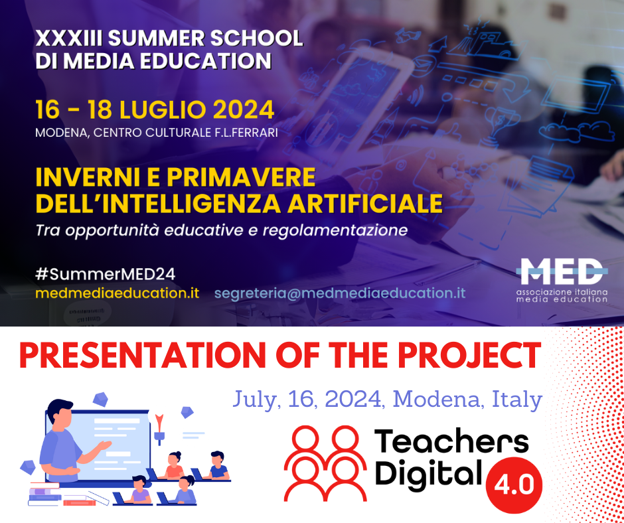
    On July 16, 2024, the Teachers 4.0 Digital project will be presented at the XXXIII Summer School of Media Education in Modena, Italy. The Summer School, this year entitled toArtificial Intelligence Winters and Springs – Between educational opportunities and regulation is organized by the Italian Association for Media Education (MED).

    The MED is a non-profit organization established in 1996 in Rome by a group of university professors, school teachers, and media professionals to promote research, study, and experimentation in the field of media education, media studies, and pedagogy, both at school and community level so that young people, as well as adults, may develop the capacity to interact critically and reflexively with the current complex social-cultural environment they live in.

    One of the most important initiatives organized by the Association since 1996 is the Summer School where every year national and international scholars, school teachers and educators, students, and media professionals meet and confront each other about the issues and concerns regarding the promotion of active citizenship through Media Education. The Teachers 4.0 Digital project will be presented during a dedicated parallel session of the Summer School by Prof. Gianna Cappello, President of the National Board of the MED and Coordinator of the project for the University of Palermo, and by Paola Macaluso, National Board Member, and PhD student at the University of Palermo.

    Teachers 4.0 Digital empowers teachers in primary and secondary schools across Europe to promote digital [media] literacy and to tackle disinformation in their classrooms. The project offers a large-scale capacity-building activity for initial training and continuous professional development of teachers and educators with focus on Bulgaria, Cyprus, Greece, Italy, Poland and Romania.

    Interested in staying in touch with us for future news, events and learning opportunities?

    Follow us on LinkedIn, Facebook, Instagram!

  • University of Lodz works with other partners on the curriculum module: “Students in all their diversity”

    University of Lodz works with other partners on the curriculum module: “Students in all their diversity”

    The University of Lodz, along with other Teachers 4.0 Digital project partners, is currently developing the curriculum module “Students in All Their Diversity.” This module addresses various aspects of diversity, going beyond the cultural diversity. The goal is to provide comprehensive teaching materials in both English and national languages by the end of October this year.

    An important activity within the module under development involves analyzing documents at the EU level, including the report “Promoting diversity and inclusion in schools in Europe” published by the European Education and Culture Executive Agency detailing the initiatives implemented by the participating countries.

    In the digital age, children and young people are constantly exposed to a variety of online content, including misinformation and fake news. Cultural diversity among students can affect how they interpret and respond to this content, posing new challenges for educators. It can also influence how young people understand and evaluate the credibility of information. Students raised in different cultural contexts may have varied experiences and perspectives that impact their ability to critically assess content.

    For example, children from families where the media is traditionally seen as a reliable source of information may be less likely to question the news than those raised in environments where skepticism about the media is common. Similarly, in hierarchical cultures, information from authority figures may be less likely to be questioned, whereas in cultures that approach authority with detachment, information from such figures is more often scrutinized.

    The perception of time also plays a role: In cultures where time is perceived more flexibly, messages may be processed with less urgency, contrasting with more structured environments where information is studied and responded to more quickly. Additionally, a lot of information is conveyed through nuance and context, which can lead to differences in interpretation by individuals from cultures that prefer direct and clear messages.

    Religious taboos and cultural norms further affect the reception of news that are perceived as controversial, such as LGBT rights. These examples illustrate how diversity influences the way information is received and understood by children and young people from different backgrounds. It is crucial for educators to be aware of these differences and to adapt their teaching and communication methods to be effective and appropriate for diverse audiences.

  • Sofia University Joins Teachers 4.0 Digital Project to Empower Teachers with Digital Media Literacy

    Sofia University Joins Teachers 4.0 Digital Project to Empower Teachers with Digital Media Literacy

    Sofia University “St. Kliment Ohridski” is one of the partners of the Teachers 4.0 Digital project that aims to empower teachers and educators to face the pressing societal issues of tackling disinformation and promoting digital [media] literacy in their classrooms.

    The project is a large-scale capacity-building initiative that foresees the development and implementation of a comprehensive solution to these issues through:

    – An initial teacher training programme to be implemented by different pedagogical departments of six major European universities in Bulgaria, Cyprus, Greece, Romania, Italy, and Poland;

    – A continuous professional development programme to be offered by adult education providers,

    – A policy impact through the participation of Ministries of Education and relevant public or regional authorities.

    Therefore, the project will develop a comprehensive curriculum to guide teachers and educators in appropriate ways to enhance their students’ skills and help them succeed in the digital age. A university course will be designed with focus on tackling disinformation and advancing the digital [media] literacy. And finally an e-learning platform will be developed to host and offer the Teachers 4.0 Digital course in a blended learning format, thus enabling to upskill thousands of primary and secondary school teachers and educational professionals.

    The experts from Sofia University involved in the project include Prof. Madeleine Danov, Vice-Rector of Educational Affairs, Prof. Gergana Petkova, Dean of the Faculty of Classic and Modern Philology, Prof. Dimitar Vesselinov, Head of the Department of Information and In-Service Training of Teachers, Prof. Magdalena Panayotova, Expert in Vocational training, Prof. Milena Yordanova, Head of the Department of Methodology of Foreign Language Teaching, Prof. Danail Danov, Media Studies and Media Literacy specialist, Dr. Katya Stoyanova, Specialist in Media Literacy Training, and Dr. Simeon Hinkovski, IT expert and lecturer in Digital Tools.

    Digital media literacy is among the main tools in tackling disinformation in our media-dependent world. Preparing children and students to be critically literate when assessing information online is key to develop their ability to identify and use trustful sources and benefit from the advantages of digital media. Media-literate citizens are the basis for democratic processes in modern societies, and therefore education that helps them to be open to the challenges of the ever-changing technological world will be essential for their future development.

    Media pedagogy at Sofia University

    Sofia University has a strong tradition of preparing students and teachers in media literacy. As from 1997, a MA program in media pedagogy was launched in the Faculty of Educational Studies and the Arts, to be followed in 2007 by a corresponding BA program (in Bulgarian and English), enabling the qualification of students in the field of media literacy. Currently, a PhD is being run to fulfill the growing needs of media pedagogy specialists in educating children, students, and adults.

    The aim of the BA program Media Pedagogy and Artistic Communication is theoretical and practical preparation focused on acquiring knowledge, skills, and awareness of the digital environment and its algorithms in education and art. Students are expected to develop skills for diagnostics and professional advice: consultation and counseling on topical issues related to the organization and management of education. They should be able to apply these skills in their practice by adopting the educational tools of pedagogy, cultural and media studies. In their practical course of foreign language acquisition, they develop competencies using information and communication technologies for better interaction during classwork.

    In a world where technology overwhelms personal and business life being media literate is crucial, and its development is a life-long process. The Teachers 4.0 Digital project integrates some key competencies to apply their development into cross-disciplinary curriculums at all levels of education. Teachers are supposed to help their students think critically and make reasonable and healthy decisions, so the project curricula provide an appropriate base of sources for such pedagogical interaction.

    For example, the wide-range of tasks assigned to students will show them differences between facts and opinions and develop learners’ understanding of media and how it works. Being media literate gives safe opportunities to engage fully and creatively with the media world. Working with students who are supposed to be future creators and users of media products is the easiest way to form a huge pool of educators who will prepare children and students for the challenges of everyday life. Media literacy is not the only solution to disinformation, it is a fundamental part of a democratic society.

    The importance of media literacy

    Technological development in general, and digitalization in specific, has changed tremendously the reach and impact of disinformation nowadays. Internet connection and digital tools allow everyone, everywhere, and at any time to be a viewer or/ and creator of online content. So, education should help people understand their responsibility in the contemporary digital environment and assist them to better interact with the media with greater awareness, sticking to journalistic ethics and standards. Media regulation and media policies certainly help the proper development of democratic societies and, more importantly, developing digital [media] literacy – the key factor for understanding the complicated nature of the constantly evolving virtual space. 

    From such a perspective, digital [media] literacy appears to be the long-term solution that helps people everywhere to successfully cope with the challenges posed by the media world. The project is expected to create practical and easy-to-work guidelines and instructions that will help learners seek and find the most appropriate solutions in using the advantages of the abundance of online and offline information. Along with that, it would provide them with a better understanding of the challenges of the media tools and content, and consequently, with working means to effectively combat them.

    In a nutshell, the Teachers 4.0 Digital project and its courses are designed not to give the right answers to certain problems, but rather to make people learn to think critically about all that they see, perceive, and process, by raising their overall level of digital [media] literacy as an effectively operating tool for social resilience.

  • NKUA and EUC launch their module development to empower teachers in promoting digital media literacy and tackling disinformation!

    NKUA and EUC launch their module development to empower teachers in promoting digital media literacy and tackling disinformation!

    On April 12th, the National and Kapodistrian University of Athens (NKUA), specifically the Department of Pedagogy and Primary Education headed by the Chairman of the Department Konstantinos Skordoulis, launched the work for the development of two modules for the Teachers 4.0 Digital Curriculum in collaboration with the European University of Cyprus (EUC).

    With the presence of Charis Xinari from EUC, the two partners had the chance to discuss about the important topic of digital [media] literacy and to lay the groundwork to start the creation of two of the ten very important modules, namely: “Disinformation: What are we talking about?”  and “More key terms and definitions”.

    The goal of the Teachers 4.0 Digital project is to create a thorough educational curriculum and a university course that will include all the required readings and materials to help educators and pre-service teachers address issues related to combating disinformation and promoting digital [media] literacy in their classrooms.

    In today’s rapidly digitalized world, digital [media] literacy is crucial and is progressively influencing education. The rapidly changing media and information landscape, combined with the large number of online platforms and information sources, requires citizens not only to navigate the digital world with confidence, but also to be informed and critical. Promoting digital [media] literacy and tackling disinformation in classrooms and schools has never been more important than it is today. Both teachers/educators and students, regardless of grade level or type of school, are faced with an increasingly complex online environment in which there is more to read, hear and see than ever before.

    Education and training can play a key role in equipping citizens with the skills needed to be critical in the online world. To ensure the effective development of digital media literacy and countering disinformation through the education and training process, teachers and trainers need to be further supported with guidance and practical examples.

    In this direction, the work of the NKUA started on the development of the two current modules to provide practical exercises for teachers, including advice and activity plans to enhance understanding of how digital [media] literacy can be achieved and provide useful insights into the dynamics and manifestations of disinformation. 

    The modules will consist of learning outcomes, theoretical insight and  activities/exercises to assess the student teachers’ pre-knowledge as well as activities/exercises to assess and evaluating students teachers’ learning. The aim is to strengthen their ability to address the problem of disinformation in classrooms and to work together to support youth in developing their resilience while enabling them to think critically, make wise decisions online, and be safe.