
At Mediawise Society, one of our key commitments within the Teachers 4.0 Digital project has been the development of Module 6: Exploring the Key Media Practices of Children and Students. We created this module from scratch, drawing on relevant research and theoretical frameworks to offer a comprehensive and engaging resource for teachers. Our work involved not only drafting the full theoretical content but also structuring it into a digestible e-learning experience, adding interactive elements such as online resources, videos, and quizzes, and ensuring that the material was fully adapted to the project’s digital platform.
This process, part instructional design, part digital storytelling, offered an important reminder: in media and digital literacy education, how we present knowledge is just as crucial as the knowledge itself.
From dense theory to “digestible learning”
The original script for Module 6 was packed with theoretical perspectives: from constructivist learning and critical pedagogy to media ecology and the EU Kids Online model. It included insights from research and policy (UNCRC, General Comment No. 25), and positioned media practices as a gateway into understanding the rights, risks, and opportunities faced by young people in digital environments.
For in-service teachers’ training, our task was to retain that academic depth while making the module accessible to busy teachers, many of whom may be encountering these frameworks for the first time. This meant:
- Segmenting the text into manageable, “bite-sized” units that follow the logic of digital learning. Instead of overwhelming readers with dense theory, we broke down key approaches, like constructivism, situated learning, and critical pedagogy, into short, focused sections. Each one comes with a clear heading, a quick explanation, and a direct connection to how it helps teachers connect with students’ digital lives.
- We added videos, links, and real-world examples to bring abstract ideas to life, giving teachers quick ways to dive deeper without feeling overwhelmed.
- Designing a final quiz that encourages reflective learning, not just factual recall. The final quiz goes beyond memorizing terms, it includes thought-provoking questions that challenge common assumptions and get teachers thinking critically about what they think they know about students’ digital habits.
- Ensuring that the material felt relevant and actionable for educators across Europe. We made sure the content speaks to teachers everywhere by tying big ideas to practical classroom moves, like using students’ own media habits to spark discussions about disinformation, or exploring rights-based approaches through the UNCRC and General Comment No. 25. Real tools for real classrooms.
This wasn’t just an editorial challenge but an exercise in empathy: How do we support teachers in understanding their students’ media cultures without overwhelming them?
Why students’ media and digital practices matter
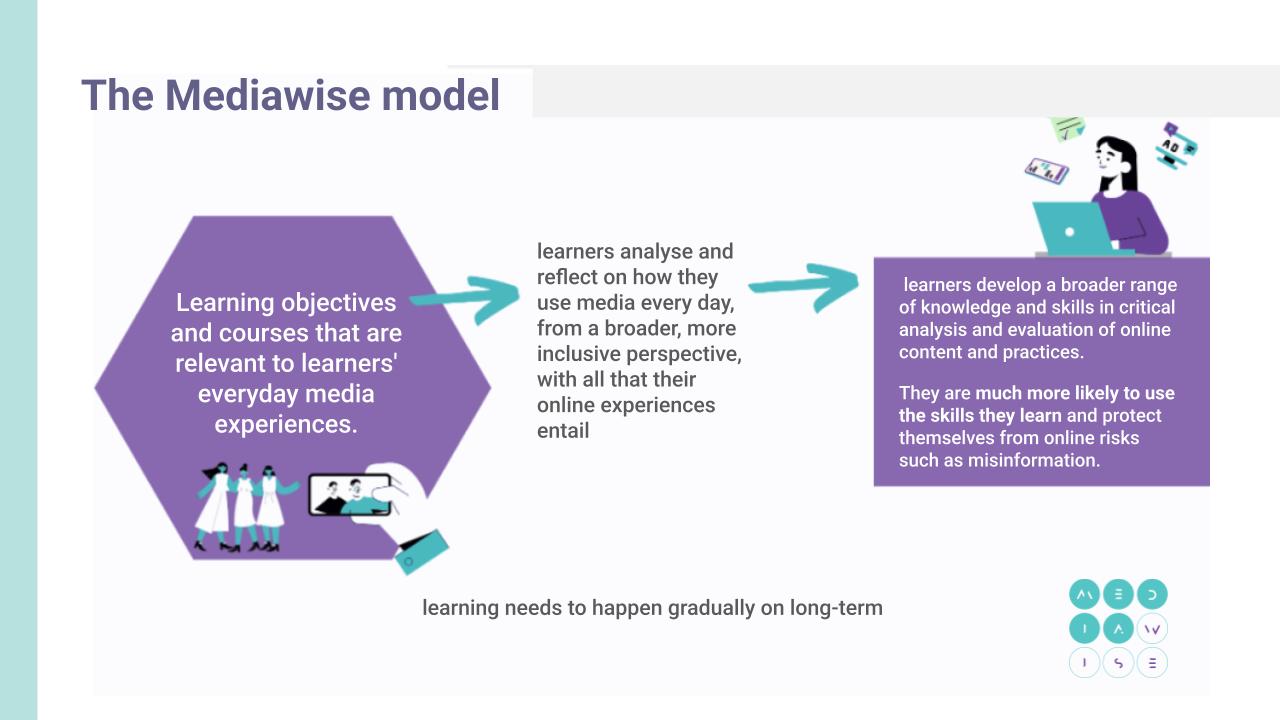
One of the strongest messages in Module 6 is the value of starting from students’ own media habits when teaching about digital literacy, critical thinking, or disinformation.
This idea, grounded in constructivist and culturally responsive pedagogies, reminds us that students are not blank slates. They are already immersed in the media. They already interpret, remix, and share information daily. Good media education doesn’t ignore this, it begins there.
By building on students’ real-life digital experiences, teachers can create more engaging lessons, foster deeper learning, and even promote children’s rights in digital contexts (freedom of expression, participation, identity, privacy). This is particularly important in a time marked by information pollution, as students face not only disinformation but also subtle manipulations that shape their perceptions and identities online.
Lessons learned from the process
This contribution taught us a few things that we believe are worth sharing:
- Designing for teachers means respecting their time and professional expertise. Every extra paragraph or unclear concept is a potential barrier. Simplicity is not simplification, it’s a form of respect.
- Modules like this are more than training content. They are part of a broader cultural shift, helping educators feel more confident and better equipped to guide students through the complex media environments they live in.
- Even when developing a module from the ground up, the pedagogical choices we make (in structure, language, tone, and activity design) deeply shape how (and whether) the material resonates with its audience. Every decision, from the theoretical anchors selected to the way activities are framed, directly impacts how teachers engage with and apply the content in their classrooms.
Looking ahead
As the Teachers 4.0 Digital e-learning platform prepares for launch, we’re proud of our contribution not only to the development of Module 6 but also to the adaptation and translation of several other modules. Looking ahead, we’re excited to coordinate the continuous training of 200 teachers over the next year, a major step forward in helping educators bring media and digital literacy into their classrooms with confidence.
This work wouldn’t be possible without the support and collaboration of our national partners, West University of Timișoara and the Ministry of Education and Research, who play a key part in advancing media education in Romania.
We hope the course supports teachers in their daily work and inspires them to stay curious about their students’ digital lives, not as distractions, but as opportunities for connection, dialogue, and shared learning.
Author: Flavia Țăran