Author: Martina Natalini

  • University of Lodz works with other partners on the curriculum module: “Students in all their diversity”

    University of Lodz works with other partners on the curriculum module: “Students in all their diversity”

    The University of Lodz, along with other Teachers 4.0 Digital project partners, is currently developing the curriculum module “Students in All Their Diversity.” This module addresses various aspects of diversity, going beyond the cultural diversity. The goal is to provide comprehensive teaching materials in both English and national languages by the end of October this year.

    An important activity within the module under development involves analyzing documents at the EU level, including the report “Promoting diversity and inclusion in schools in Europe” published by the European Education and Culture Executive Agency detailing the initiatives implemented by the participating countries.

    In the digital age, children and young people are constantly exposed to a variety of online content, including misinformation and fake news. Cultural diversity among students can affect how they interpret and respond to this content, posing new challenges for educators. It can also influence how young people understand and evaluate the credibility of information. Students raised in different cultural contexts may have varied experiences and perspectives that impact their ability to critically assess content.

    For example, children from families where the media is traditionally seen as a reliable source of information may be less likely to question the news than those raised in environments where skepticism about the media is common. Similarly, in hierarchical cultures, information from authority figures may be less likely to be questioned, whereas in cultures that approach authority with detachment, information from such figures is more often scrutinized.

    The perception of time also plays a role: In cultures where time is perceived more flexibly, messages may be processed with less urgency, contrasting with more structured environments where information is studied and responded to more quickly. Additionally, a lot of information is conveyed through nuance and context, which can lead to differences in interpretation by individuals from cultures that prefer direct and clear messages.

    Religious taboos and cultural norms further affect the reception of news that are perceived as controversial, such as LGBT rights. These examples illustrate how diversity influences the way information is received and understood by children and young people from different backgrounds. It is crucial for educators to be aware of these differences and to adapt their teaching and communication methods to be effective and appropriate for diverse audiences.

  • Sofia University Joins Teachers 4.0 Digital Project to Empower Teachers with Digital Media Literacy

    Sofia University Joins Teachers 4.0 Digital Project to Empower Teachers with Digital Media Literacy

    Sofia University “St. Kliment Ohridski” is one of the partners of the Teachers 4.0 Digital project that aims to empower teachers and educators to face the pressing societal issues of tackling disinformation and promoting digital [media] literacy in their classrooms.

    The project is a large-scale capacity-building initiative that foresees the development and implementation of a comprehensive solution to these issues through:

    – An initial teacher training programme to be implemented by different pedagogical departments of six major European universities in Bulgaria, Cyprus, Greece, Romania, Italy, and Poland;

    – A continuous professional development programme to be offered by adult education providers,

    – A policy impact through the participation of Ministries of Education and relevant public or regional authorities.

    Therefore, the project will develop a comprehensive curriculum to guide teachers and educators in appropriate ways to enhance their students’ skills and help them succeed in the digital age. A university course will be designed with focus on tackling disinformation and advancing the digital [media] literacy. And finally an e-learning platform will be developed to host and offer the Teachers 4.0 Digital course in a blended learning format, thus enabling to upskill thousands of primary and secondary school teachers and educational professionals.

    The experts from Sofia University involved in the project include Prof. Madeleine Danov, Vice-Rector of Educational Affairs, Prof. Gergana Petkova, Dean of the Faculty of Classic and Modern Philology, Prof. Dimitar Vesselinov, Head of the Department of Information and In-Service Training of Teachers, Prof. Magdalena Panayotova, Expert in Vocational training, Prof. Milena Yordanova, Head of the Department of Methodology of Foreign Language Teaching, Prof. Danail Danov, Media Studies and Media Literacy specialist, Dr. Katya Stoyanova, Specialist in Media Literacy Training, and Dr. Simeon Hinkovski, IT expert and lecturer in Digital Tools.

    Digital media literacy is among the main tools in tackling disinformation in our media-dependent world. Preparing children and students to be critically literate when assessing information online is key to develop their ability to identify and use trustful sources and benefit from the advantages of digital media. Media-literate citizens are the basis for democratic processes in modern societies, and therefore education that helps them to be open to the challenges of the ever-changing technological world will be essential for their future development.

    Media pedagogy at Sofia University

    Sofia University has a strong tradition of preparing students and teachers in media literacy. As from 1997, a MA program in media pedagogy was launched in the Faculty of Educational Studies and the Arts, to be followed in 2007 by a corresponding BA program (in Bulgarian and English), enabling the qualification of students in the field of media literacy. Currently, a PhD is being run to fulfill the growing needs of media pedagogy specialists in educating children, students, and adults.

    The aim of the BA program Media Pedagogy and Artistic Communication is theoretical and practical preparation focused on acquiring knowledge, skills, and awareness of the digital environment and its algorithms in education and art. Students are expected to develop skills for diagnostics and professional advice: consultation and counseling on topical issues related to the organization and management of education. They should be able to apply these skills in their practice by adopting the educational tools of pedagogy, cultural and media studies. In their practical course of foreign language acquisition, they develop competencies using information and communication technologies for better interaction during classwork.

    In a world where technology overwhelms personal and business life being media literate is crucial, and its development is a life-long process. The Teachers 4.0 Digital project integrates some key competencies to apply their development into cross-disciplinary curriculums at all levels of education. Teachers are supposed to help their students think critically and make reasonable and healthy decisions, so the project curricula provide an appropriate base of sources for such pedagogical interaction.

    For example, the wide-range of tasks assigned to students will show them differences between facts and opinions and develop learners’ understanding of media and how it works. Being media literate gives safe opportunities to engage fully and creatively with the media world. Working with students who are supposed to be future creators and users of media products is the easiest way to form a huge pool of educators who will prepare children and students for the challenges of everyday life. Media literacy is not the only solution to disinformation, it is a fundamental part of a democratic society.

    The importance of media literacy

    Technological development in general, and digitalization in specific, has changed tremendously the reach and impact of disinformation nowadays. Internet connection and digital tools allow everyone, everywhere, and at any time to be a viewer or/ and creator of online content. So, education should help people understand their responsibility in the contemporary digital environment and assist them to better interact with the media with greater awareness, sticking to journalistic ethics and standards. Media regulation and media policies certainly help the proper development of democratic societies and, more importantly, developing digital [media] literacy – the key factor for understanding the complicated nature of the constantly evolving virtual space. 

    From such a perspective, digital [media] literacy appears to be the long-term solution that helps people everywhere to successfully cope with the challenges posed by the media world. The project is expected to create practical and easy-to-work guidelines and instructions that will help learners seek and find the most appropriate solutions in using the advantages of the abundance of online and offline information. Along with that, it would provide them with a better understanding of the challenges of the media tools and content, and consequently, with working means to effectively combat them.

    In a nutshell, the Teachers 4.0 Digital project and its courses are designed not to give the right answers to certain problems, but rather to make people learn to think critically about all that they see, perceive, and process, by raising their overall level of digital [media] literacy as an effectively operating tool for social resilience.
  • NKUA and EUC launch their module development to empower teachers in promoting digital media literacy and tackling disinformation!

    NKUA and EUC launch their module development to empower teachers in promoting digital media literacy and tackling disinformation!

    On April 12th, the National and Kapodistrian University of Athens (NKUA), specifically the Department of Pedagogy and Primary Education headed by the Chairman of the Department Konstantinos Skordoulis, launched the work for the development of two modules for the Teachers 4.0 Digital Curriculum in collaboration with the European University of Cyprus (EUC).

    With the presence of Charis Xinari from EUC, the two partners had the chance to discuss about the important topic of digital [media] literacy and to lay the groundwork to start the creation of two of the ten very important modules, namely: “Disinformation: What are we talking about?”  and “More key terms and definitions”.

    The goal of the Teachers 4.0 Digital project is to create a thorough educational curriculum and a university course that will include all the required readings and materials to help educators and pre-service teachers address issues related to combating disinformation and promoting digital [media] literacy in their classrooms.

    In today’s rapidly digitalized world, digital [media] literacy is crucial and is progressively influencing education. The rapidly changing media and information landscape, combined with the large number of online platforms and information sources, requires citizens not only to navigate the digital world with confidence, but also to be informed and critical. Promoting digital [media] literacy and tackling disinformation in classrooms and schools has never been more important than it is today. Both teachers/educators and students, regardless of grade level or type of school, are faced with an increasingly complex online environment in which there is more to read, hear and see than ever before.

    Education and training can play a key role in equipping citizens with the skills needed to be critical in the online world. To ensure the effective development of digital media literacy and countering disinformation through the education and training process, teachers and trainers need to be further supported with guidance and practical examples.

    In this direction, the work of the NKUA started on the development of the two current modules to provide practical exercises for teachers, including advice and activity plans to enhance understanding of how digital [media] literacy can be achieved and provide useful insights into the dynamics and manifestations of disinformation. 

    The modules will consist of learning outcomes, theoretical insight and  activities/exercises to assess the student teachers’ pre-knowledge as well as activities/exercises to assess and evaluating students teachers’ learning. The aim is to strengthen their ability to address the problem of disinformation in classrooms and to work together to support youth in developing their resilience while enabling them to think critically, make wise decisions online, and be safe.

  • Teachers 4.0 Digital launches the curriculum development to empower teachers in digital media literacy!

    Teachers 4.0 Digital launches the curriculum development to empower teachers in digital media literacy!

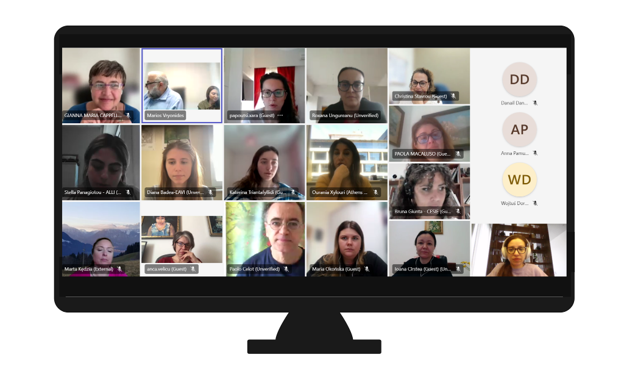
    On the 9th of April, Teachers 4.0 Digital partners had their 4th online monthly meeting to discuss the progress of the project and to plan the forthcoming tasks and deliverables. The consortium just launched the development of a comprehensive educational curriculum and the design of a University Course that aim to empower pre-service teachers and educators to promote digital [media] literacy, and to tackle disinformation in their classrooms.

    The University of Palermo (UNIPA) is leading the development of the modules with the support of project partners who will be busy with compiling content and resources during the next couple of months:

    • National Kapodistrian University, along with the European University of Cyprus, will create a preliminary module on ‘Disinformation’, in addition to ‘Key terms and Definitions’, which will enrich the knowledge of teachers regarding disinformation and clarify the fundamental terminologies in the ecosystem.
    • Athens Lifelong Learning Institute will develop the module ‘Setting the Scene for Teaching and Learning in the Digital School Environment’ with activities focusing on “how to create a learning environment that is conducive to helping students become digitally [media] literate and helping them develop the competencies needed to become resilient to misinformation, misinformation and especially disinformation”.
    • UNIPA will develop an assessment module entitled ‘Assessing and Evaluating Digital [Media] Literacy in Schools‘, while Mediawise will focus on the development of a module on ‘Exploring the Key Media Practices of Children and Students’.
    • University of Sofia is developing the module ‘Teaching Digital [Media] Literacy and Disinformation‘ while EAVI is working towards the development of ‘Building Digital [Media] Literacy Competencies in the Classroom and School: Becoming Digital Citizens’.
    • The University of Lodz and West University of Timisoara are working respectively on the modules ‘Students in all their Diversity’ and ‘Practical Examples of Lesson Plans’.
    • The curriculum will also include a Glossary and a list of current resources and references.