
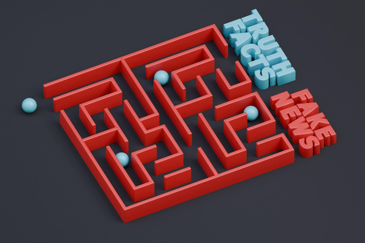
In today’s digital era, disinformation has become an integral part of the information landscape that students navigate every day. From social media feeds to online news platforms, young people are constantly exposed to a wide range of content which might be accurate, misleading, and everything in between.
Addressing this reality in the classroom is not a simple or immediate task. Rather, it requires a deeper understanding of how information is created, shared, and interpreted, as well as the development of critical approaches that evolve over time.
The Challenge of Information Overload
One of the most significant obstacles is the sheer volume of information available online. Students are constantly exposed to an overwhelming flow of content through social media, news platforms, and digital communities. This abundance makes it difficult not only to identify reliable sources but also to develop the patience and skills required for critical evaluation.
Research has shown that individuals often rely on heuristics, quick mental shortcuts, when processing large amounts of information, which can increase susceptibility to misinformation (Wineburg & McGrew, 2019). In such an environment, the issue is not simply access to information, but the ability to navigate it meaningfully.
Algorithms, Echo Chambers, and Filter Bubbles
Another layer of complexity lies in the structure of the digital ecosystem itself. Algorithms curate content based on users’ preferences, interactions, and prior behavior. While this personalization enhances user experience, it can also limit exposure to diverse perspectives.
As Pariser (2011) describes, “filter bubbles” can reinforce existing beliefs by repeatedly exposing users to similar viewpoints. For students, this means that disinformation is not always encountered as an obvious falsehood but often as content that aligns with what they already think or feel.
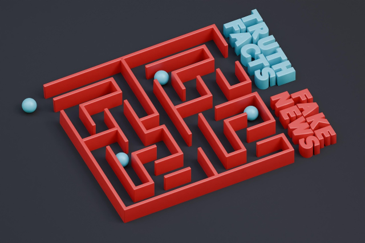
But what happens when students trust information not because it is reliable, but because it feels familiar?
This question highlights the deeper challenge educators face: helping students move beyond passive consumption toward critical and reflective engagement.
Students’ Digital Habits and Practices
Students today are active participants in digital environments, but participation does not necessarily equate to critical understanding. Many rely on fast, surface-level consumption of information like scrolling, liking, and sharing content without deeper reflection.
Studies indicate that young people may struggle to evaluate the credibility of online information, particularly when content appears visually appealing or is shared by peers (McGrew et al., 2018). This highlights a key issue: digital familiarity does not automatically lead to digital literacy.
As one student from Teachers 4.0 Digital Age university course reflected: “I realized that fake news is not only something you see in politics or the media. It is everywhere…even in small everyday stories we share.”
The Evolving Role of the Teacher
In this complex landscape, the role of the teacher is also evolving. Educators are no longer simply transmitters of knowledge; they are facilitators who guide students in questioning, analyzing, and reflecting on information.
Teaching about disinformation requires more than presenting correct answers. It involves creating learning environments where students can explore ambiguity, engage in dialogue, and develop independent judgment. As the European Commission (2020) emphasizes, fostering critical thinking and digital competence is essential for active citizenship in democratic societies.
How Teachers 4.0 Digital Age Responds to This Challenge
Recognizing this complexity, the Teachers 4.0 Digital Age project: “Tackling Disinformation and Promoting Digital Literacy through Education and Training in European Classrooms” adopts a comprehensive approach to digital literacy education. Through its structured curriculum and interactive modules, the project goes beyond technical skills to support deeper engagement with the dynamics of disinformation.By combining theoretical insights with collaborative and reflective learning practices, the course encourages future educators to understand not only what disinformation is, but how and why it spreads and how it can be addressed meaningfully in the classroom.
A Continuous Process, not a One-Time Skill
Ultimately, combating disinformation is not a skill that can be mastered through a single lesson. It is an ongoing process that requires continuous reflection, adaptation, and critical engagement.
As another student noted: “I learned not only how to spot disinformation, but also how to question my own assumptions.”
The challenge is no longer simply to teach students what to think, but to help them learn how to think in an increasingly complex digital world.
Stay Connected
Are you interested in learning more about how Teachers 4.0 Digital Age supports educators in tackling disinformation and promoting digital literacy in European classrooms?
Stay updated on our latest developments, insights, and educational resources by following us on LinkedIn, Instagram, and Facebook and don’t forget to subscribe to our newsletter for upcoming updates!
References
European Commission. (2020). Digital Education Action Plan (2021–2027). Resetting education and training for the digital age. eur-lex.europa.eu/legal-content/EN/TXT/PDF/?uri=CELEX:52020DC0624
McGrew, S., Breakstone, J., Ortega, T., Smith, M., & Wineburg, S. (2018). Can Students Evaluate Online Sources? Learning From Assessments of Civic Online Reasoning. Theory & Research in Social Education, 46(2), 165–193. https://doi.org/10.1080/00933104.2017.1416320
Pariser, E. (2011). The filter bubble: What the Internet is hiding from you. penguin UK.
Wineburg, S., & McGrew, S. (2019). Lateral reading and the nature of expertise: Reading less and learning more when evaluating digital information. Teachers College Record, 121(11), 1-40. https://doi.org/10.1177/016146811912101102